
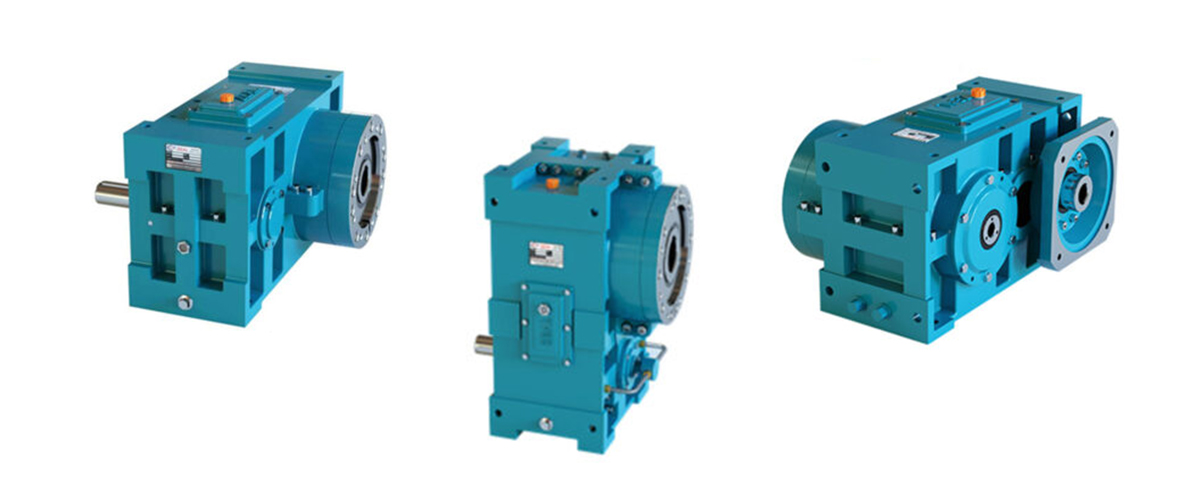
Walk into any plastic extrusion plant — whether it produces pipes, films, cables, profiles, or sheets — and you will find one component at the heart of every machine: a gearbox. But not just any gearbox. In the vast majority of modern plastic extrusion machines, the helical gearbox has become the undisputed standard. Yet many plant managers, maintenance engineers, and production supervisors find themselves asking: why helical? What makes this particular type of gearbox so well-suited to the demands of plastic extrusion? Why do leading extruder manufacturers specify helical gearboxes over other options, and what real-world advantages does this choice deliver on the production floor? This blog answers all of those questions. We will explore the seven key reasons why helical gearboxes dominate plastic extrusion applications, compare them directly with alternative gearbox types, walk through the specific demands that plastic extrusion places on a gearbox, and guide you on how to select the right helical gearbox for your machine. By the time you finish reading, you will understand exactly why the helical gearbox is not just a preference — it is an engineering necessity for high-performance extrusion.
The Unique Demands of Plastic Extrusion on a Gearbox
Before understanding why helical gearboxes are preferred, it is essential to understand what plastic extrusion actually demands from its drive system. Plastic extrusion is not a light-duty intermittent process — it is one of the most mechanically demanding continuous industrial operations in existence.
The extruder screw must rotate continuously — often for 20 to 24 hours per day — while simultaneously pushing viscous plastic melt through a die under pressures that can reach 300 to 700 bar. This generates an enormous and sustained axial thrust load on the screw shaft, combined with a very high torque demand at relatively low rotational speed. At the same time, the process is highly sensitive to speed variation — even small fluctuations in screw RPM can cause visible defects in the extruded product such as thickness variation, surface roughness, or dimensional inconsistency.
This combination of requirements — very high sustained torque, low output speed, continuous duty operation, resistance to axial thrust forces, and absolutely smooth rotational output — creates a very specific set of demands that most gearbox types simply cannot meet consistently. The helical gearbox meets all of them.
The 5 Core Gearbox Demands in Plastic Extrusion
- Very high continuous torque output — sustained for hours or days without interruption
- Precise speed reduction — from motor speed (960–1480 RPM) to screw speed (15–150 RPM)
- Smooth, vibration-free rotation — to prevent product defects and dimensional variation
- High axial thrust capacity — to absorb screw reaction forces during melt pressurization
- Long service life under continuous duty — minimum downtime, maximum production uptime
What Makes a Helical Gearbox Different?
A helical gearbox is defined by its use of helical gears — gears whose teeth are cut at a specific helix angle relative to the gear shaft axis, typically between 15 and 30 degrees. This seemingly simple design difference compared to conventional straight-toothed spur gears creates a cascade of mechanical advantages that are directly relevant to extrusion applications.
In a spur gear, the entire tooth face engages and disengages instantaneously, creating an impact-like loading that is transmitted directly through the gear mesh. In a helical gear, the tooth engagement begins at one end of the tooth face and progresses smoothly along the helix angle until full engagement is reached, then gradually disengages. At any given moment, multiple teeth are partially engaged simultaneously.
This gradual, overlapping tooth engagement is the fundamental reason behind every performance advantage that helical gearboxes offer. It distributes the transmitted load across more material, reduces peak contact stress, smooths out torque transmission, and dramatically reduces noise and vibration — all of which matter enormously in a plastic extrusion environment.
7 Key Reasons Helical Gearboxes Are Preferred in Plastic Extrusion
Reason 1 — Superior Torque Transmission for High-Viscosity Plastics
Plastic materials — particularly rigid PVC, HDPE, PP, and engineering polymers — have very high melt viscosity. Pushing these materials through an extruder barrel requires enormous and sustained torque at the gearbox output shaft. Helical gears transmit torque more efficiently than spur gears because the load is shared across multiple gear teeth simultaneously, reducing the peak stress on any individual tooth.
This distributed load-sharing allows helical gearboxes to transmit significantly higher torque from the same physical gear size compared to spur-gear alternatives, making them ideally suited to the high-torque demands of plastic extrusion without requiring an excessively large or heavy gearbox housing.
Reason 2 — Smooth, Constant-Speed Output for Dimensional Accuracy
In plastic extrusion, output speed consistency directly determines product quality. A pipe with wall-thickness variation, a film with streaks, or a cable with diameter fluctuation can often be traced back to rotational irregularity in the drive system. Helical gears provide inherently smoother torque transmission than spur gears because the gradual tooth engagement eliminates the periodic impulses that spur gears generate at the tooth meshing frequency.
This smoothness results in a more consistent extruder screw speed, which produces more uniform melt pressure, more consistent throughput rate, and ultimately a higher-quality extruded product with tighter dimensional tolerances — a critical advantage when producing precision products such as medical tubing, optical fibre conduits, or automotive profiles.
Reason 3 — Higher Mechanical Efficiency Reduces Energy Costs
Energy cost is one of the largest operating expenses in a plastic extrusion plant. A helical gearbox typically operates at 95% to 98% mechanical efficiency, meaning that 95 to 98% of the motor’s input power is delivered as useful torque to the extruder screw. The remaining 2 to 5% is lost primarily as heat through gear mesh friction.
Over a full production year — with machines running 20 hours per day, 300 days per year — even a 2% improvement in gearbox efficiency can translate to thousands of units of electricity saved per machine. For a plant with multiple extrusion lines, this efficiency advantage of the helical gearbox has a measurable and significant impact on the energy bill.
Reason 4 — Low Noise and Vibration Protects Machine and Product
Noise and vibration are not merely operator comfort issues — they are indicators of mechanical stress and energy being wasted. In a plastic extrusion environment, excessive vibration from the gearbox can transmit through the extruder barrel and die, causing micro-instability in the melt flow that appears as surface defects on the final product.
Helical gearboxes operate at significantly lower noise and vibration levels than spur gearboxes of equivalent power rating. The gradual tooth engagement characteristic of helical gears means there is no sudden gear-mesh impact at the tooth frequency. This results in a smoother, quieter drive system that protects both the mechanical integrity of the extruder and the surface quality of the product being produced.
Reason 5 — Integrated Thrust Bearing Handles Axial Screw Forces
One of the most demanding mechanical challenges in extruder drive design is the management of axial thrust forces. As the extruder screw pushes plastic melt towards the die, it generates a powerful reaction force directed back along the screw axis towards the gearbox. In high-output extrusion lines, this axial thrust force can reach hundreds of kilonewtons.
Extruder helical gearboxes are specifically designed with a heavy-duty thrust bearing assembly integrated into the output shaft housing. This thrust bearing is engineered and rated to absorb the full axial load generated by the screw throughout continuous operation. This is a design feature unique to extruder-specific gearboxes — standard industrial gearboxes are not built to handle these sustained axial loads and would fail rapidly if used in their place.
Reason 6 — Compact Design Relative to Power Rating
Manufacturing floor space is always at a premium in a plastic extrusion plant. Helical gearboxes offer a very favourable power-to-size ratio compared to alternative gear arrangements. Because helical gears transmit torque so efficiently — with multiple teeth sharing the load — a helical gearbox can be more compact for a given power and torque rating than a comparable spur gear arrangement.
This compactness makes installation and alignment easier, reduces the weight that must be supported by the extruder frame, and allows more machines to be installed in a given floor area — all practical advantages in a production environment.
Reason 7 — Long Service Life and Low Maintenance Cost
In a 24/7 plastic production environment, unplanned downtime is extremely costly. Every hour that an extrusion line is stopped for gearbox failure or maintenance represents lost production, wasted raw material, and potential delivery delays. Helical gearboxes have a long and proven track record of reliable continuous-duty operation in extrusion applications.
The smooth load distribution across multiple teeth means that gear tooth wear is minimised and fatigue cracking is far less likely compared to spur gears operating under the same load. With correct lubrication and routine maintenance, a quality extruder helical gearbox can deliver ten, fifteen, or even twenty years of reliable service — making it an excellent long-term investment for any plastic extrusion operation.
Helical Gearbox vs Other Gearbox Types: Direct Comparison
To fully appreciate why helical gearboxes dominate in plastic extrusion, it is useful to compare them directly against the alternative gear arrangements that could theoretically be used in this application.
| Feature / Criteria | Helical Gearbox | Spur Gearbox | Worm Gearbox | Bevel Gearbox |
| Torque Capacity | Very High | High | Medium | High |
| Efficiency (%) | 95 – 98% | 93 – 96% | 50 – 90% | 94 – 97% |
| Noise Level | Low | Medium-High | Low | Low |
| Vibration Level | Very Low | Medium | Low | Low |
| Continuous Duty Suitability | Excellent | Good | Fair | Good |
| Thrust Load Handling | Excellent | Poor | Poor | Fair |
| Speed Reduction Range | Wide | Wide | Very Wide | Moderate |
| Compact Size vs Power | Excellent | Good | Good | Good |
| Maintenance Requirements | Low | Low-Medium | Medium | Low-Medium |
| Cost for Extrusion Use | Optimal | Less suitable | Not suitable | Specialised |
As the comparison clearly shows, the helical gearbox outperforms alternative types across every criterion that matters specifically for plastic extrusion: high efficiency, low noise, very low vibration, excellent continuous-duty suitability, and superior thrust load handling. No other common gearbox type matches this combination of characteristics for the specific demands of a plastic extrusion line.
How Plastic Material Type Affects Gearbox Selection
Not all plastics are the same, and the material being extruded has a direct influence on the torque and speed requirements of the gearbox. Understanding this relationship helps you select the correct gearbox specification for your specific application.
| Plastic Material | Typical Melt Viscosity | Torque Demand | Gearbox Consideration |
| Rigid PVC (uPVC) | Very High | Very High | Highest torque rating required; counter-rotating twin screw preferred |
| Soft PVC | Medium | Medium | Standard torque rating; single or twin screw suitable |
| HDPE / LLDPE | High | High | High torque; good thrust bearing capacity essential |
| PP (Polypropylene) | Medium-High | High | High torque at startup; service factor minimum 1.5 recommended |
| PET | Low-Medium | Medium | Lower torque but high temperature resistance of gearbox required |
| ABS / Engineering Polymers | High | High | Wide speed range often needed; variable speed drive compatibility important |
| LDPE / EVA | Low-Medium | Medium | Smoother melt; standard helical gearbox with moderate torque rating |
The key takeaway from this table is that materials with higher melt viscosity — particularly rigid PVC and HDPE — demand gearboxes with higher torque ratings and more robust thrust bearing assemblies. Always specify your gearbox based on the most demanding material you will process, not on an average across your product range.
Common Gearbox Problems in Plastic Extrusion and How to Prevent Them
Even the best helical gearbox will underperform or fail prematurely if it is not properly maintained or if it was incorrectly selected in the first place. Here are the most common gearbox problems encountered in plastic extrusion plants and how to prevent each one:
Problem 1 — Gear Tooth Wear and Pitting
Cause: Inadequate lubrication, contaminated oil, or overloading beyond the rated torque capacity.
Prevention: Change gearbox oil at the manufacturer-recommended intervals (typically every 3,000 to 5,000 hours). Use the specified oil viscosity grade. Never operate the gearbox continuously above its rated torque. Install an oil temperature gauge and alarm if operating in high-ambient-temperature environments.
Problem 2 — Bearing Failure
Cause: Overloading, misalignment between motor and gearbox shafts, contaminated lubricant, or bearing fatigue from extended overdue replacement.
Prevention: Check and correct shaft alignment during installation and after any maintenance that involves removing the gearbox. Inspect bearings every 6 months. Replace bearings proactively at recommended service intervals rather than waiting for failure.
Problem 3 — Oil Leakage from Seals
Cause: Worn or hardened shaft seals, excessive internal pressure from overheating, or seals deteriorated by incorrect oil type.
Prevention: Inspect all oil seals annually. Replace seals immediately at the first sign of weeping or leakage. Always use the oil type and viscosity grade specified for your gearbox — incompatible oils can accelerate seal deterioration. Ensure breather vents are clean and unblocked.
Problem 4 — Overheating
Cause: Overloading, insufficient oil level, blocked cooling fins, or very high ambient temperature around the gearbox.
Prevention: Check oil level weekly. Keep the gearbox housing clean and free of dust and plastic residue that can act as insulation. Install an oil temperature monitor with a high-temperature alarm. For high-ambient environments or very high-power applications, consider a forced-feed lubrication system with an external oil cooler.
Problem 5 — Excessive Noise or Vibration
Cause: Worn gear teeth, failing bearings, shaft misalignment, inadequate oil film on gear surfaces, or operation beyond rated capacity.
Prevention: Conduct routine vibration analysis every 6 to 12 months using a vibration meter or accelerometer. Increased noise or vibration is almost always an early warning of developing damage — investigate immediately rather than waiting for breakdown. Many major gearbox failures can be prevented by acting on these early warning signs.
Our Helical Gearbox Range for Plastic Extrusion
Our range of extruder helical gearboxes is engineered specifically for the demands of plastic extrusion — from single-screw pipe and film lines to high-output twin-screw compounding extruders. Every gearbox in our range is designed and built to deliver the continuous-duty performance, high efficiency, and long service life that plastic extrusion demands.
Key Features of Our Extruder Helical Gearboxes
- Precision-Ground Helical Gears: All gear sets are manufactured from high-grade case-hardened alloy steel, precision-ground to DIN quality standards for maximum efficiency and minimum noise.
- Heavy-Duty Integrated Thrust Bearing: Our gearboxes feature a purpose-designed thrust bearing assembly rated for the full axial screw load in continuous extrusion duty.
- High Mechanical Efficiency: Operating efficiency of up to 98%, keeping your energy costs down across all operating shifts.
- Wide Gear Ratio Range: Standard gear ratios from 8:1 to 80:1, with custom ratios available to match any motor and screw speed combination.
- Single and Twin Screw Variants: Available in configurations for single-screw extruders (all materials) and co-rotating or counter-rotating twin-screw extruders.
- Comprehensive Torque Range: Covering output torque ratings from 500 Nm for small laboratory extruders up to 250,000 Nm for large-diameter industrial extrusion lines.
- Application Engineering Support: Our technical team will help you select the correct gear ratio, torque rating, thrust bearing capacity, and mounting configuration for your specific extruder and material requirements.
Whether you are commissioning a new extrusion line, upgrading an existing machine, or replacing a failed gearbox, we can help you select and supply the right helical gearbox solution for your application.
Frequently Asked Questions (FAQs)
Q1. Can I use a standard industrial helical gearbox on my plastic extruder?
A standard industrial helical gearbox is not recommended for plastic extruder duty. Standard gearboxes are not designed with the integrated high-capacity thrust bearing that is essential to absorb the axial screw forces in extrusion. Using a standard gearbox without an appropriate thrust bearing assembly will result in premature bearing failure and can damage the output shaft. Always use a gearbox specifically designed and rated for extruder duty.
Q2. How do I know if my extruder gearbox is the right size for my application?
The key parameters to verify are: output torque rating (must exceed the maximum torque your screw will demand, with a service factor of at least 1.25), gear ratio (output speed must match your required screw RPM), thrust bearing capacity (must exceed the maximum axial force your screw generates), and input speed (must match your motor’s rated RPM). If you are unsure of any of these values, our engineering team can help you calculate the correct specification based on your extruder and material data.
Q3. What is the correct oil type and change interval for an extruder helical gearbox?
Most extruder helical gearboxes use industrial gear oil to ISO VG 220 or ISO VG 320 viscosity grade, depending on the operating temperature and manufacturer specification. Always refer to the gearbox manufacturer’s lubrication manual for the exact specification. Oil changes are typically recommended every 3,000 to 5,000 operating hours or every 12 months, whichever occurs first. Operating with contaminated or degraded oil is the single most common cause of premature gearbox failure.
Q4. How long should an extruder helical gearbox last?
A correctly specified, properly installed, and regularly maintained extruder helical gearbox should provide a minimum service life of 10 years in normal continuous-duty extrusion operation. Many well-maintained gearboxes continue to operate reliably for 15 to 20 years or more. The key factors affecting service life are correct sizing for the application, consistent lubrication maintenance, correct alignment at installation, and operating within the rated torque and speed limits.
Q5. What is the difference between a co-rotating and counter-rotating twin screw gearbox?
In a co-rotating twin screw gearbox, both output shafts rotate in the same direction. This configuration is used in intermeshing twin screw compounders, masterbatch extruders, and devolatilising extruders, where the co-rotating screws generate efficient distributive and dispersive mixing. In a counter-rotating twin screw gearbox, the two output shafts rotate in opposite directions. This configuration is used primarily in PVC pipe, profile, and sheet extrusion, where the counter-rotating screws generate a positive conveying and pressurising action. The choice between the two depends entirely on your process and material requirements.
Conclusion
The preference for helical gearboxes in plastic extrusion machines is not a matter of tradition or habit — it is the result of decades of engineering development driven by the specific and demanding requirements of the extrusion process. The seven key advantages we have explored in this blog — superior torque transmission, smooth speed output, high efficiency, low noise and vibration, integrated thrust load capacity, compact design, and long service life — each address a real and critical requirement of continuous plastic extrusion duty.
No other common gearbox type matches the helical gearbox across all of these criteria simultaneously. Spur gearboxes are noisier and generate more vibration. Worm gearboxes are less efficient and poorly suited to the high-continuous-torque demand of extrusion. Bevel gearboxes are better suited to directional power transmission than to straight-line high-torque drive applications. The helical gearbox is quite simply the right tool for the job — engineered to match the demands of plastic extrusion precisely.
If you are selecting a gearbox for a new extrusion line, evaluating an upgrade to an existing machine, or planning the replacement of a worn-out unit, take the time to specify correctly — consider your material, your screw diameter, your required output speed and torque, and your ambient operating conditions. The right helical gearbox, correctly selected and properly maintained, will serve your production line reliably for many years.
