
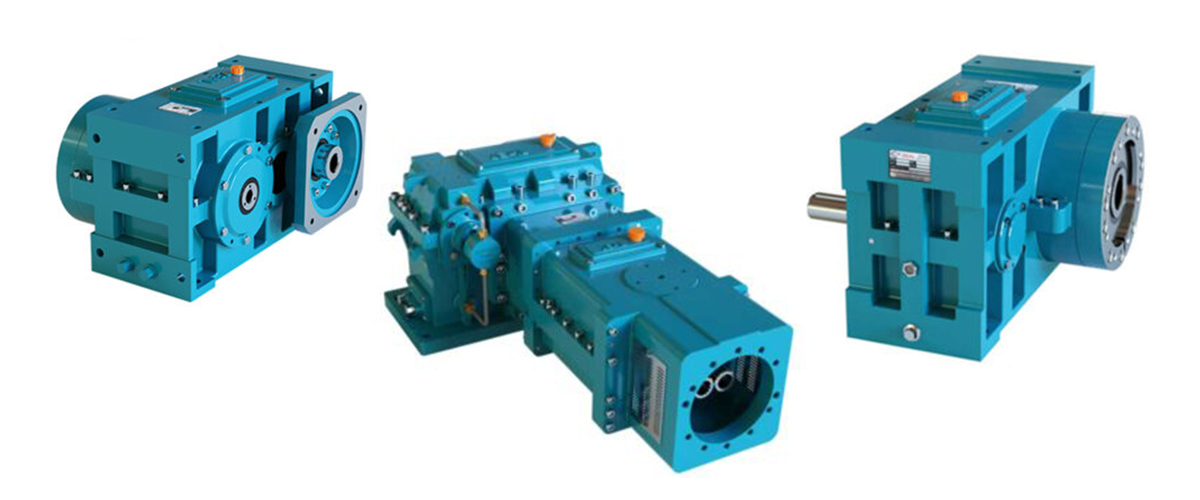
A well-maintained extruder gearbox in a plastic processing plant should last 15 to 25 years. Most do not — and the gap between expected and actual service life almost always comes down to maintenance practices, operating habits, and gearbox selection rather than any inherent limitation of the equipment itself. In the competitive world of plastic extrusion — whether you are producing PVC pipes, HDPE films, PP sheets, or masterbatch compounds — the gearbox is the mechanical constant in every production run. When it fails prematurely, the cost is not just the replacement component. It is the unplanned downtime, the rushed procurement, the overtime labour, and the lost production orders. A gearbox that should have lasted 20 years failing at year 7 or 8 represents a significant financial loss that most plant engineers would prefer to avoid. The good news is that extending gearbox life in plastic extrusion is not a complicated or expensive undertaking. It requires consistent attention to a defined set of maintenance and operational principles. This blog gives you a comprehensive, practical guide — covering lubrication, load management, alignment, vibration monitoring, cooling, contamination control, and more — so your gearbox delivers the longest possible service life.
What Determines Extruder Gearbox Service Life?
Before focusing on how to extend gearbox life, it is important to understand what determines it in the first place. Gearbox service life in plastic extrusion is not a fixed number — it is a variable that responds directly to how the equipment is operated and maintained.
The seven most significant life factors are listed in the table below, ranked by their impact:
| Life Factor | Impact on Gearbox Life | Typical Life Reduction if Neglected |
| Lubrication quality & interval | Highest | Up to 60% shorter bearing & gear life |
| Operating load vs. rated torque | Very High | 40–70% reduction when running at 110%+ load |
| Shaft alignment accuracy | High | 30–50% increase in bearing wear rate |
| Cooling & thermal management | High | Lubricant life halved for every 10 °C excess |
| Oil contamination control | Medium-High | 20–50% reduction in bearing fatigue life |
| Vibration & shock loads | Medium | 10–30% faster gear tooth surface fatigue |
| Maintenance frequency | Medium | Cumulative effect — compounds all of the above |
The Compound Effect of Neglect
Each factor in isolation can reduce gearbox life by 30–60%. In combination — which is common when maintenance is reactive rather than planned — the cumulative effect can cut expected gearbox life in half or more. A gearbox running with degraded oil, at 110% of rated torque, in a misaligned condition, in a high-temperature environment is not experiencing one problem. It is experiencing five problems simultaneously, each accelerating the others.
Conversely, a gearbox that is correctly lubricated, properly loaded, precisely aligned, and regularly inspected will consistently approach or exceed the manufacturer’s rated service life — often delivering 20+ years of reliable service in continuous-duty plastic extrusion applications.
Info: Key Insight: Industry maintenance data from gear manufacturers consistently shows that more than 70% of premature gearbox failures are directly attributable to lubrication-related causes — including insufficient lubrication, contaminated oil, wrong oil grade, and exceeding oil change intervals.
10 Proven Strategies to Increase Gearbox Life
Strategy 1 – Master Your Lubrication Programme
Lubrication is the single highest-impact action you can take to extend gearbox life. A comprehensive lubrication programme covers four dimensions:
- Oil grade selection: Always use the viscosity grade specified in your gearbox manual — typically ISO VG 220 or ISO VG 320 for extruder gearboxes. Never substitute a lower-viscosity oil assuming it will run cooler.
- Oil change intervals: For mineral oil in continuous-duty extrusion, change at 4,000–5,000 operating hours. For synthetic oil, intervals of 6,000–10,000 hours are achievable with oil analysis confirmation.
- Oil analysis: Annual or 1,000-hourly laboratory oil analysis measures viscosity, total acid number (TAN), water content, and wear metal concentrations. It is the most cost-effective gearbox diagnostic tool available.
- Correct fill level: Always verify the oil level on the sight glass before each production shift. Low oil level reduces thermal mass and lubrication film thickness simultaneously.
Strategy 2 – Consider Upgrading to Synthetic Gear Oil
One of the most impactful upgrades available to plastic extrusion plant engineers is switching from mineral to synthetic PAO (Polyalphaolefin) gear oil. The table below compares both options across the parameters that matter most for gearbox life:
| Parameter | Mineral Oil | Synthetic PAO Oil |
| Viscosity Grade (typical) | ISO VG 220 / 320 | ISO VG 220 / 320 |
| Operating temp. range | –10 °C to +90 °C | –30 °C to +120 °C |
| Oil change interval | 5,000–6,000 hrs | 18,000–20,000 hrs |
| Thermal stability | Moderate | Excellent |
| Viscosity Index | 90–100 | 140–160 |
| Foam resistance | Good | Excellent |
| Relative cost | Low | 2–3× mineral cost |
| ROI for continuous duty | Baseline | Strongly positive over 3+ years |
For extrusion lines running two or three shifts per day, the extended drain intervals of synthetic oil alone can offset its higher purchase cost within the first year — while simultaneously reducing thermal stress on gears and bearings.
Strategy 3 – Achieve and Maintain Precise Shaft Alignment
Misalignment between the gearbox output shaft and the extruder screw coupling assembly is one of the most underdiagnosed causes of premature bearing and seal failure. Even small angular or parallel misalignment — as little as 0.05 mm — creates cyclic loading on the output bearings that dramatically accelerates wear.
Follow these alignment principles to protect your gearbox:
- Use laser alignment tools rather than dial indicators for extruder gearbox alignment — they are faster, more accurate, and eliminate parallax errors
- Verify alignment after every production line changeover, after any maintenance that involves disturbing the gearbox or extruder barrel, and after any significant thermal event
- Check for soft foot — inadequate support under the gearbox base frame — before performing final alignment. Soft foot causes the gearbox housing to distort under bolt tightening, defeating even a perfect alignment
- Document alignment readings in the gearbox maintenance log. Trending alignment data over time reveals whether the machine is shifting on its mounts — a sign of foundation issues or thermal growth problems
Strategy 4 – Never Operate Beyond Rated Torque
Every extruder gearbox has a rated output torque and an application service factor (typically 1.25 to 1.75 for plastic extrusion applications). The service factor accounts for shock loading and torque spikes during material transitions and screw start-ups. Operating at or above 100% of rated torque on a continuous basis eliminates this safety margin and places gears and bearings in a regime of accelerated surface fatigue.
Monitor your extruder’s motor current draw and, where available, torque readout on the drive panel. If the gearbox is consistently running above 85% of rated torque, either reduce production speed, process material in smaller batches, or initiate an engineering review to determine whether a higher-rated gearbox is appropriate for the application.
Strategy 5 – Implement Vibration Monitoring
Vibration analysis is the most powerful predictive maintenance tool available for rotating gearbox components. Gearboxes give advance notice of bearing failures through their vibration signature — typically 4 to 8 weeks before the bearing reaches a condition that would cause sudden failure. Without monitoring, this warning goes unheard.
A practical vibration monitoring programme for extruder gearboxes includes:
- Establish a baseline vibration signature on a healthy gearbox immediately after installation or overhaul — this is your reference for all future readings
- Take monthly vibration readings at standard measurement points on the gearbox housing — input shaft bearing, intermediate shaft, and output shaft bearing locations
- Set alert thresholds at 150% of baseline vibration amplitude and alarm thresholds at 200% — these trigger an inspection, not necessarily an immediate shutdown
- Engage a specialist vibration analyst annually to perform a full spectrum analysis — this can identify gear mesh frequencies, bearing defect frequencies, and resonance issues that routine amplitude monitoring misses
Strategy 6 – Control Contamination Ruthlessly
Gear oil contamination — particularly water ingress and particulate contamination — is disproportionately damaging to bearing fatigue life. Research has demonstrated that water contamination of just 0.1% in gear oil reduces bearing L10 life by up to 50%. Particulate contamination at ISO cleanliness levels two grades higher than the recommended target can reduce bearing life by a factor of three or more.
Practical contamination control measures for extruder gearboxes include fitting breather filters rated at 3–5 micron on all gearbox vent ports; inspecting shaft seals monthly and replacing them at the first sign of weeping; using sealed oil sampling valves rather than open drain plugs for oil sampling; and storing replacement oil in sealed containers, never in open drums exposed to ambient air.
Strategy 7 – Manage Startup and Shutdown Procedures
Cold start-ups — especially in winter or in cold-store-adjacent production areas — subject gearbox bearings and gears to inadequate lubrication during the critical first seconds of rotation, before the oil pump has circulated warmed lubricant to all contact surfaces. Similarly, abrupt shutdowns under load can cause oil drain-back, leaving upper bearings momentarily unlubricated at the next startup.
- Allow the gearbox to warm up at no-load or low-load for 5–10 minutes at ambient temperatures below 10 °C before applying full production torque
- Install a thermostatically controlled oil pre-heater on gearboxes in cold environments — this ensures oil viscosity is within specification before the first rotation
- Use a slow-ramp speed controller on the drive to avoid torque spikes at startup — these spikes can be 2–3× the steady-state torque and are highly damaging to gear tooth surfaces
For planned shutdowns, coast the extruder down under light load rather than stopping abruptly — this allows the oil pump to circulate oil through the bearings as rotational speed decreases
Strategy 8 – Maintain the Cooling System
Thermal management directly determines lubricant life — and lubricant life determines gearbox life. Many plastic extrusion plants operate in high-ambient-temperature environments, particularly in tropical climates, where the cooling system is the only barrier between the gearbox and chronic oil over-temperature.
Service the oil-to-water heat exchanger every six months by flushing with a descaling agent appropriate for your coolant water chemistry. Check the coolant flow rate using the differential pressure across the heat exchanger — a rising differential indicates fouling. In hard-water areas, consider fitting a water softener or using distilled water in the cooling circuit to prevent scale accumulation.
Strategy 9 – Keep Detailed Maintenance Records
A maintenance log that records every oil change, oil analysis result, alignment reading, vibration measurement, temperature observation, and component replacement is one of the most cost-effective tools for extending gearbox life. It transforms individual data points into trends, and trends into early warnings.
When the same gearbox consistently shows oil contamination at a specific interval, the log reveals whether the contamination is coming from a recurring seal failure, from coolant bypass in the heat exchanger, or from external ingress. Without records, every oil change is a surprise. With records, it is a scheduled confirmation of predicted behaviour.
Strategy 10 – Select the Right Gearbox from the Start
All of the maintenance strategies above assume you are working with a gearbox that was correctly specified for your application in the first place. An undersized gearbox — one with a service factor below 1.25 for a continuous-duty extrusion application, or one with inadequate thrust bearing capacity for the extruder screw diameter — will have a shortened life regardless of how well it is maintained.
When replacing or upgrading a gearbox, verify the rated output torque, service factor, thrust bearing rating (in kN), input speed, gear ratio, and centre distance against your extruder’s actual operating requirements. A correctly sized gearbox is the foundation upon which all other life-extension strategies are built.
Building a Gearbox Life Extension Programme
The 10 strategies above become most powerful when they are formalised into a documented gearbox life extension programme — a set of scheduled tasks assigned to specific roles, with defined intervals and measurable outcomes. The table below provides a ready-to-adapt maintenance programme for plastic extrusion plant gearboxes:
| Action | Interval | Who | Expected Benefit |
| Check oil level & temperature | Daily | Operator | Catches drops in oil level or rising temp early |
| Inspect seals, fittings, and hoses for leaks | Weekly | Technician | Prevents contamination entry and lube starvation |
| Monitor vibration signature (baseline) | Monthly | Maintenance | Detects bearing wear 2–4 weeks before failure |
| Flush cooling circuit / heat exchanger | Every 6 months | Maintenance | Sustains thermal performance year-round |
| Oil sample & laboratory analysis | Every 1,000 hrs | Maintenance | Optimises drain intervals; detects wear metals early |
| Oil drain, flush, and refill | Every 2,000 hrs | Maintenance | Removes degraded oil and accumulated contaminants |
| Full inspection — bearings, gears, seals | Annually | Engineer | Validates gearbox health; plans ahead for component life |
| Alignment verification | After any disturbance | Engineer | Prevents accelerated bearing and seal wear |
Cost of the Programme vs. Cost of a Failure
A complete gearbox life extension programme for a single extruder gearbox typically costs less than US $2,000 per year in labour, oil, analysis fees, and consumables. A single unplanned gearbox failure — requiring emergency parts procurement, overtime maintenance, and lost production — routinely costs US $15,000 to US $50,000 or more depending on plant size and production schedule. The economics of preventive maintenance are unambiguous.
Plant Tip: Best Practice: Assign a dedicated gearbox maintenance owner — a specific technician or engineer who is responsible for tracking all gearbox health data across the plant. Plants with a defined owner for gearbox maintenance consistently report longer equipment life and fewer unplanned failures than plants where responsibility is shared informally.
Why Gearbox Design Matters for Long Service Life
Even the most rigorous maintenance programme cannot compensate for a fundamentally poor gearbox design. The design of the gearbox itself — gear geometry, bearing selection, lubrication system architecture, and housing rigidity — determines the ceiling of achievable service life.
Our helical extruder gearboxes are designed from the ground up for long service life in continuous-duty plastic processing applications. Here is what differentiates them at the design level:
- Case-hardened and precision-ground helical gears: Ground gear teeth achieve a surface finish of Ra ≤ 0.8 µm, reducing friction at the gear mesh, lowering heat generation, and delivering a more uniform contact pattern that distributes load evenly across the tooth face.
- Oversized tapered roller bearings on the output shaft: The output shaft assembly carries both radial loads from screw weight and significant axial (thrust) loads from the extruder screw. Our gearboxes use generously rated tapered roller bearings with L10 life calculations verified against the actual axial and radial loads of each target application.
- Integrated oil pump with full-flow filtration: A dedicated gear oil pump circulates filtered oil to all critical contact zones under positive pressure, independent of splash lubrication — ensuring bearing oil film integrity at all operating speeds, including low-speed jogging.
- Ribbed cast iron housings with precision-bored bearing seats: The housing rigidity prevents bearing seat distortion under thermal cycling and load, preserving bearing clearances throughout the gearbox’s service life.
- Lip seal and labyrinth seal combinations: Dual sealing at all shaft exits combines the active sealing of a lip seal with the passive protection of a labyrinth, significantly reducing contamination ingress and oil weeping — two of the most common gearbox maintenance complaints in extrusion plants.
Our Solution: Our helical extruder gearboxes are available for extruder diameters from 30 mm to 200 mm, with gear ratios from 10:1 to 25:1 and output torque ratings from 500 Nm to over 60,000 Nm. Contact our engineering team with your extruder specifications for a tailored recommendation.
Frequently Asked Questions
Q1. What is the expected service life of an extruder gearbox in a plastic extrusion plant?
A correctly specified and well-maintained extruder gearbox should achieve a service life of 15 to 25 years in continuous-duty plastic processing applications. This assumes the gearbox is operated within its rated torque capacity, lubricated with the correct oil grade and changed at the recommended interval, properly aligned, and subject to a structured preventive maintenance programme. Gearboxes that are operated without these conditions often fail within 7 to 10 years – sometimes earlier.
Q2. How do I know if my gearbox is undersized for my extruder?
The key indicator is the operating torque relative to the gearbox’s rated output torque. If your extruder’s drive motor is consistently drawing above 85–90% of its rated current, and the gearbox is running at high temperature or showing accelerated oil contamination, there is a strong possibility the gearbox is operating above its comfortable service range. Compare the actual extruder screw torque requirement — calculated from motor power, efficiency, and gear ratio — against the gearbox’s published rated torque. A service factor below 1.25 for continuous extrusion is insufficient.
Q3. Is synthetic gear oil worth the additional cost for extruder gearboxes?
In most continuous-duty plastic extrusion applications, yes. Synthetic PAO gear oils offer significantly better thermal stability, a higher viscosity index (meaning viscosity changes less with temperature), and extended drain intervals of 18,000–20,000 hours compared to 5,000–6,000 hours for mineral oil. The higher oil purchase cost is typically recovered within 12–18 months through reduced maintenance labour, fewer oil changes, and lower thermal stress on gears and bearings. The ROI is strongest on extrusion lines running two or three shifts per day.
Q4. How often should extruder gearbox alignment be checked?
Alignment should be verified after any maintenance event that involves disturbing either the gearbox or the extruder barrel, after any significant thermal event or emergency shutdown, and as part of the annual planned maintenance inspection. For new installations or after a gearbox overhaul, verify alignment again after the first 500 operating hours, as initial settling of mounts and thermal growth can shift the alignment condition. Plants that check alignment only at initial installation and never again are among the most likely to experience premature bearing failures.
Q5. Can I extend the oil change interval if the oil looks clean?
Visual appearance is not a reliable indicator of oil condition. Gear oil can look completely clean while having a significantly degraded viscosity index, elevated total acid number (TAN) indicating oxidation, or a wear metal concentration that signals active bearing damage. The only reliable way to determine whether an oil change can be safely extended is through laboratory oil analysis. Without analysis, following the manufacturer’s specified change interval is the safest approach — extending intervals without data increases the risk of undetected lubrication failure.
Q6. What are the early warning signs of gearbox wear in an extrusion plant?
The earliest warning signs include a gradual increase in operating temperature over several weeks without a change in load or ambient conditions; a change in noise character — higher pitch, intermittent knocking, or increased background noise from the gearbox housing; oil samples showing elevated iron or chromium concentrations on spectroscopic analysis; vibration amplitude trending upward at monthly monitoring points; and an increase in oil consumption or visible oil weeping at shaft seals. Any single one of these signs warrants investigation. Two or more occurring simultaneously indicates an active wear process requiring immediate attention.
Q7. What should I do when installing a replacement gearbox to maximise its life from day one?
Start by verifying the replacement gearbox specification matches the application requirements — not just the original unit’s model number, as the original may have been undersized. Before installation, fill with the correct oil grade and run the gearbox briefly on a test bench if possible. During installation, achieve laser-aligned coupling before final bolt-down. Complete a soft-foot check. Run the gearbox at no load for 30 minutes to verify temperature stability, then at 50% load for two hours before returning to full production. Take a baseline oil sample at 100 operating hours and a baseline vibration reading at first startup — these become your reference standards for the entire service life.
Conclusion
Extending gearbox life in a plastic extrusion plant is not about luck or expensive upgrades. It is about applying a consistent set of well-understood engineering and maintenance principles, every week, throughout the gearbox’s operational life.
The most important actions to take away:
- Build a structured lubrication programme — correct oil grade, correct interval, supported by oil analysis
- Achieve and document precision shaft alignment at installation and after every disturbance
- Never allow sustained operation above 85–90% of rated output torque
- Implement monthly vibration monitoring and act on trends before they become failures
- Control contamination — fit breather filters, inspect seals regularly, and store oil correctly
- Maintain the cooling system to protect lubricant life, which in turn protects gearbox life
- Keep accurate maintenance records — they convert data into early warnings
Starting from the right foundation matters too. If your current gearbox is undersized or approaching the end of its service life, contact our engineering team for a specification review and product recommendation — we will match the right helical extruder gearbox to your extruder diameter, screw design, and production demands.
