
Quick Answer: Most bearing failures in plastic extruder gearboxes come down to four preventable causes — poor or contaminated lubrication, misalignment between the gearbox and extruder shaft, thermal overload from restricted cooling, and running the gearbox beyond its rated thrust capacity. A fixed inspection, lubrication, and vibration-monitoring schedule prevents the vast majority of these failures.
Why Bearing Failure Is the #1 Cause of Extruder Gearbox Downtime
Ask any plant maintenance head in the plastics or rubber processing industry what causes the most unplanned gearbox downtime, and the answer is almost always the same: bearing failure. In a single-screw or twin-screw extruder gearbox, the bearings are the components absorbing the continuous radial load of the screw and the heavy axial thrust generated as molten polymer pushes back against the die. Unlike gear teeth, which wear gradually and give visible warning signs, a bearing under stress can go from “slightly noisy” to “seized” within a single production shift.
The financial impact is significant. A single unplanned extruder gearbox stoppage in a plastics or rubber processing line can halt an entire extrusion run, leading to scrapped material, missed dispatch schedules, and emergency repair costs that are typically several times higher than the cost of routine preventive maintenance. Industry field data on rotating equipment consistently shows that bearing-related issues account for a large share of gearbox breakdowns — and the overwhelming majority of those failures are preventable, not random.
This is especially relevant for extruder gearboxes because they operate in one of the toughest duty cycles in industrial machinery: continuous 24/7 running, high output torque, elevated ambient heat near the barrel, and constant axial thrust load pushing against the thrust bearing. A gearbox for plastic machinery or rubber extrusion is simply not designed the same way as a general-purpose drive — and neither is its bearing maintenance plan.
In this guide, we break down exactly what damages extruder gearbox bearings, how to catch early warning signs before a breakdown, and the maintenance practices that extend bearing life well beyond typical industry benchmarks.
What Actually Damages Bearings Inside an Extruder Gearbox
Before fixing a problem, it helps to understand precisely how it starts. Bearing failure inside a helical gearbox for extruder applications is rarely caused by a single event — it is usually the slow accumulation of one or more of the following stress factors.
Lubrication Breakdown and Contamination
Lubrication does two jobs inside a gearbox: it separates moving metal surfaces to prevent direct metal-to-metal contact, and it carries heat away from the bearing race. When oil viscosity drops due to overheating, when the oil level runs low, or when moisture and metal particles contaminate the lubricant, the protective film between the rolling elements and the bearing race breaks down. This is widely regarded as the single largest contributor to premature bearing failure in industrial gearboxes, ahead of fatigue, corrosion, and installation errors combined.
Shaft Misalignment
Even a small angular or parallel misalignment between the extruder screw shaft and the gearbox output shaft creates an uneven load distribution across the bearing. Instead of the load spreading evenly across the rolling elements, it concentrates on one section of the race, accelerating localized wear and eventually causing pitting or spalling — visible flaking of the bearing surface.
Thermal Overload
Extruder gearboxes sit close to a heated barrel and operate continuously under high torque. Without adequate heat dissipation — through cooling coils, fans, or oil coolers — internal temperatures climb, oil viscosity thins out, and bearing clearances shift outside their design tolerance. Sustained operation above the rated temperature range is one of the fastest ways to shorten spherical roller bearing life.
Excessive Axial Thrust Load
This is unique to extruder applications. As the screw pushes molten plastic or rubber toward the die, it generates substantial axial (thrust) force that transmits directly back through the gearbox output shaft into the thrust bearing. If the gearbox’s thrust bearing is undersized for the process pressure, or if die pressure exceeds the extruder’s rated operating range, the thrust bearing absorbs stress it was never designed to carry.
Contamination Ingress
Dust, moisture, and process debris entering through worn seals introduce abrasive particles into the lubrication system. Even microscopic contamination accelerates surface fatigue on bearing raceways.
| Root Cause | Early Warning Sign | Typical Time to Failure if Ignored |
| Lubrication breakdown / low oil level | Rising gearbox oil temperature, metallic smell | Weeks to a few months |
| Shaft misalignment | Localized vibration, uneven bearing wear pattern | Months |
| Thermal overload | Housing surface too hot to touch, oil discoloration | Weeks |
| Excessive thrust load | Axial play, knocking noise under load | Days to weeks |
| Contamination ingress | Cloudy or gritty oil, seal leakage | Months |
Recognizing which of these five patterns is present is the first step toward stopping bearing failure before it becomes a breakdown.
7 Practical Steps to Prevent Bearing Failure
The good news: every cause listed above is preventable with a disciplined maintenance routine. Here is the practical, field-tested sequence that extends extruder gearbox bearing life.
Step 1: Follow a Fixed Oil Analysis and Change Schedule
Do not rely on a fixed calendar date alone — combine it with condition-based monitoring. Send an oil sample for analysis every 3 to 6 months to check for viscosity breakdown, water content, and metal particle counts. Replace the gearbox oil as per the manufacturer’s recommended interval, and always use the specified viscosity grade for your ambient and operating temperature.
Step 2: Check and Correct Shaft Alignment Regularly
During every planned maintenance stop, verify the alignment between the extruder screw shaft and the gearbox output shaft using a dial indicator or laser alignment tool. Even 0.1 mm of misalignment, sustained over months of continuous running, meaningfully shortens bearing life. Re-torque mounting bolts to the specified value after every alignment correction.
Step 3: Monitor Operating Temperature Continuously
Install a temperature sensor on the gearbox housing near the bearing location, or use a handheld infrared thermometer during routine rounds. A sudden rise of 10–15°C above the normal baseline for that machine is an early indicator of a lubrication or load problem, well before you would hear any unusual noise.
Step 4: Use Vibration Analysis as an Early Warning System
Vibration signatures change well before a bearing fails audibly. A basic monthly vibration check — or continuous online monitoring for critical lines — can detect bearing defect frequencies weeks or months ahead of failure, giving maintenance teams time to schedule a planned replacement instead of reacting to an emergency shutdown.
Step 5: Respect the Gearbox’s Rated Thrust and Torque Limits
Never push die pressure or screw speed beyond the extruder gearbox’s rated capacity to chase short-term output gains. Operating consistently near or above rated thrust load is one of the fastest ways to overload a thrust bearing designed for a specific axial load envelope.
Step 6: Protect Seals and Prevent Contamination
Inspect input and output shaft seals during every service interval. A worn seal that looks intact can still allow moisture or dust ingress. Keep the gearbox exterior clean, especially around breather vents, to prevent contaminated air from being drawn into the housing during thermal cycling.
Step 7: Keep a Bearing Life Log for Each Gearbox
Track running hours, oil analysis results, temperature readings, and any corrective actions for each gearbox individually. Patterns that repeat across multiple failures on the same unit — for example, recurring thrust-side wear — usually point to a root cause like consistent overloading or a mounting issue rather than a one-off bearing defect.
Applied consistently, these seven steps address every root cause identified in the previous section, and they are the same practices Zeal Gears recommends to customers operating extruder helical gearboxes across the plastic, rubber, and food processing industries.
How Zeal Gears Engineers Extruder Gearboxes to Resist Bearing Failure
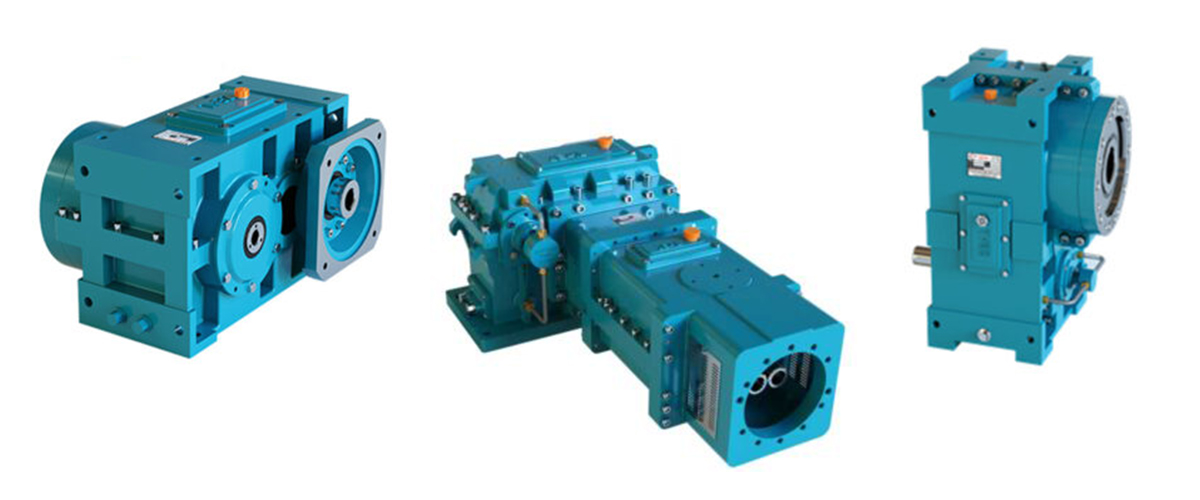
Prevention starts with maintenance discipline, but it is reinforced by how the gearbox itself is built. Zeal Gears Pvt. Ltd., a helical gearbox manufacturer based in Ahmedabad, Gujarat, designs its Extruder Helical Gearbox range specifically around the thrust and thermal demands that cause premature bearing wear in the first place.
Zeal Gears’ extruder gearboxes are fitted with spherical roller thrust bearings sized to absorb the high axial loads generated during plastic and rubber extrusion, paired with an integrated cooling system to keep operating temperature — and therefore oil viscosity — within a stable working range. The gear body is cast in graded iron with heat-resistant internal coating, and inner surfaces are treated with high-performance lubricating oil coatings to reduce friction from the moment the unit is commissioned.
Whether you run a single-screw or twin-screw extruder, Zeal Gears offers single-stage, two-stage, and two-stage-with-oil-pump configurations, along with universal and vertical mounting options, so the gearbox is matched to your actual thrust load and duty cycle rather than oversold or undersized. Zeal Gears’ team also supports customers with gearbox selection guidance and preventive maintenance planning as part of its ongoing service offering — because a well-matched gearbox, correctly maintained, is the most cost-effective way to eliminate recurring bearing failure. Explore the full range of gear box services, including repair and rebuilding of existing units using genuine spare parts.
FAQs on Extruder Gearbox Bearing Failure
Q1. What is the most common cause of bearing failure in an extruder gearbox?
Lubrication-related breakdown is the most common cause. Low oil level, degraded oil viscosity from overheating, or contamination all remove the protective film between the bearing rollers and the race, leading to metal-to-metal contact and accelerated wear. Fixing lubrication practices alone prevents a large share of premature bearing failures in continuously running extruder gearboxes.
Q2. How often should extruder gearbox oil be changed?
This depends on the manufacturer’s specification, operating temperature, and duty cycle, but most industrial extruder gearboxes need an oil change every 2,000 to 4,000 running hours, with oil condition sampled every 3 to 6 months in between. Always follow the specific interval listed in your gearbox’s installation and maintenance manual.
Q3. Can a misaligned extruder shaft really cause bearing failure?
Yes. Even minor misalignment concentrates load unevenly across the bearing rollers instead of distributing it across the full raceway. Over months of continuous operation, this uneven loading causes localized pitting and spalling that eventually leads to bearing seizure, even if every other maintenance step is followed correctly.
Q4. What are the early warning signs of a failing gearbox bearing?
Watch for a gradual rise in operating temperature above the normal baseline, a change in vibration or a new knocking sound under load, oil that looks cloudy or smells burnt, and any axial play in the output shaft. Catching these signs during routine inspection allows a planned bearing replacement instead of an unplanned breakdown.
Q5. Why do thrust bearings fail more often than radial bearings in extruder gearboxes?
Extruder gearboxes are unique because the screw generates continuous axial thrust as it pushes material toward the die, in addition to normal radial load. If the thrust bearing is undersized for the process pressure, or if die pressure runs above the rated operating range, the thrust bearing absorbs stress beyond its design capacity, which is why it often shows wear before other bearings in the unit.
Q6. Does vibration monitoring actually help prevent bearing failure, or is it just for large plants?
Vibration monitoring is valuable at any plant scale. Bearing defect frequencies typically appear in vibration data weeks or months before a failure becomes audible or causes a breakdown. Even a basic monthly handheld vibration check on critical extruder lines can identify a developing bearing problem early enough to schedule a planned replacement.
Q7. Is it worth repairing a gearbox with a failed bearing, or should the whole unit be replaced?
In most cases, repair is worthwhile if the gear teeth, shafts, and housing are still in good condition, since the bearing itself is a replaceable wear component. A qualified gearbox repair service can rebuild the unit with genuine spare parts, restoring it to original specification at a fraction of the cost of a full gearbox replacement.
Key Takeaways
Bearing failure in a plastic extruder gearbox is almost never a random event — it is the end result of lubrication breakdown, misalignment, thermal overload, or thrust loads exceeding the bearing’s rated capacity, usually developing gradually over weeks or months. A disciplined maintenance routine built around oil analysis, alignment checks, temperature monitoring, and vibration analysis catches these problems while they are still cheap and easy to fix. Just as importantly, the gearbox design itself matters: a unit engineered with correctly sized spherical roller thrust bearings and proper cooling for your specific thrust load and duty cycle will always outperform a generic, oversold gearbox running at its limit.
If your extruder gearbox is showing early signs of bearing wear, or if you are specifying a new gearbox for a plastic, rubber, or food-processing extrusion line, get in touch with Zeal Gears for gearbox selection guidance, preventive maintenance support, or a free quote on a purpose-built extruder helical gearbox.
