
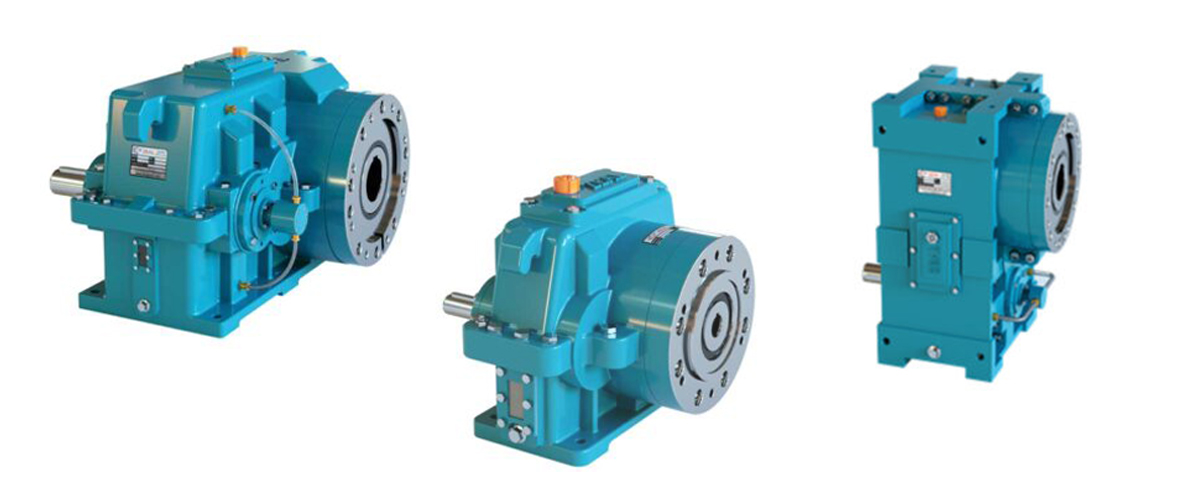
Every plastic processing machine that runs a gearbox generates heat — and every degree of temperature that heat raises above the design limit degrades gearbox performance, accelerates component wear, and shortens service life. In a plastic extrusion plant running three shifts, the gearbox cooling system is not a secondary engineering consideration. It is the difference between a drive system that provides twenty years of reliable service and one that requires major maintenance every three to five years. Despite its critical importance, gearbox cooling is one of the most frequently misunderstood and inadequately managed aspects of plastic processing machine operation. Plant engineers often notice that a gearbox is running hot, accept it as normal, and move on — unaware that elevated oil temperature is simultaneously accelerating oil oxidation, reducing oil viscosity, increasing gear and bearing wear rates, degrading shaft seals, and progressively reducing the gearbox’s thermal load capacity. By the time the consequences of chronic overheating become visible in increased noise, oil leakage, or component failure, significant and irreversible damage has already occurred. This guide provides a complete understanding of gearbox cooling systems in plastic processing machines. It explains where gearbox heat comes from, how different cooling system types work and what they are suited for, how to calculate heat load and cooling capacity, what happens at every stage of temperature escalation, how to select and maintain the right cooling system for each application, and how to diagnose and solve common cooling problems. Whether you are specifying a new machine, reviewing an existing installation, or troubleshooting an overheating problem, this guide will give you the knowledge to make informed decisions.
Why Gearbox Cooling Matters — The Thermal Challenge of Continuous Extrusion
Plastic processing machines — particularly extrusion lines — place a uniquely demanding thermal load on their drive gearboxes. Unlike many industrial applications where machines run intermittently or at variable loads, plastic extrusion is a continuous, sustained, high-power process. An extrusion line producing plastic pipe, film, or profiles may run at 80 to 95 percent of rated gearbox capacity for 20 to 24 hours per day, 300 or more days per year. The gearbox generates heat throughout this period, and that heat must be continuously removed to maintain a stable, safe operating temperature.
The thermal challenge is compounded by the operating environment. Plastic processing plants are often hot environments — particularly near extruder barrels and die heads, where ambient temperatures of 40 to 60 degrees Celsius are common. The gearbox cooling system must work against this elevated ambient temperature, requiring greater cooling capacity than the same gearbox would need in a cool, well-ventilated industrial environment.
A gearbox that generates 5 kW of heat losses in a 25 degree Celsius ambient can dissipate that heat through its housing surface by natural convection without any active cooling system. The same gearbox generating the same 5 kW heat losses in a 50 degree Celsius ambient near an extruder barrel may require an active cooling system to prevent the oil temperature from exceeding safe limits. Understanding this ambient temperature sensitivity is fundamental to correct cooling system selection.
The Thermal Performance Target for Extruder Gearboxes
Oil sump temperature: Target 50 – 70°C under normal operating conditions
Maximum 80°C for mineral oil without forced cooling
Maximum 90°C for synthetic PAO oil
Above 90°C — immediate action required to prevent damage
Housing surface temperature (external): typically 15 – 20°C above oil sump temperature
Temperature rise above ambient: Design target is typically 30 – 40°C rise
At 40°C ambient + 40°C rise = 80°C oil temp — requires active cooling in most cases
Where Does Gearbox Heat Come From?
Understanding the sources of heat generation within a gearbox is essential for correctly sizing a cooling system. Heat in a gearbox originates from three primary sources, each contributing a portion of the total thermal load.
Source 1 — Gear Mesh Losses (Sliding and Rolling Friction)
The primary source of heat in a helical gearbox is the friction at the gear mesh contact zones. Although rolling contact between helical gear teeth is very efficient (typically 98 to 99 percent efficient per gear pair), the remaining 1 to 2 percent of the transmitted power is converted to heat at each gear mesh. In a two-stage gearbox transmitting 100 kW, the gear mesh losses alone can amount to 2 to 4 kW of continuous heat generation.
In a worm gearbox, as explained in our helical vs worm gearbox comparison guide, the sliding contact mechanism generates dramatically more heat — 10 to 50 percent of the transmitted power can appear as heat at the worm-wheel interface, making worm gearbox cooling both more challenging and more critical than helical gearbox cooling.
Source 2 — Bearing Friction Losses
Rolling element bearings are highly efficient, but they are not frictionless. The rolling resistance of the bearing elements, combined with the viscous drag of the lubricant in the bearing clearances and the friction in the cage guiding the rolling elements, generates heat in proportion to the bearing load and speed. In a heavily loaded extruder output shaft bearing carrying high axial thrust combined with high radial loads, the bearing friction losses can be a significant contributor to the total gearbox heat generation.
Source 3 — Oil Churning and Windage Losses
In a splash-lubricated gearbox, the rotating gears dip into the oil sump and lift oil onto the gear surfaces, shafts, and bearings. This churning action — the agitation and movement of the oil by the rotating gears — requires energy and generates heat. At high gear speeds, windage losses — the aerodynamic drag of gear teeth moving through the oil-mist-laden air inside the housing — also contribute to the heat load. Churning and windage losses are more significant in large, high-speed gearboxes with high oil levels than in small units or slow-speed final-stage gearboxes.
Total Gearbox Heat Generation — Summary Formula
Total Heat Load (kW) = Input Power (kW) x (1 – Mechanical Efficiency)
For a helical gearbox at 97% efficiency transmitting 75 kW:
Heat Load = 75 x (1 – 0.97) = 75 x 0.03 = 2.25 kW
For a worm gearbox at 65% efficiency transmitting 75 kW:
Heat Load = 75 x (1 – 0.65) = 75 x 0.35 = 26.25 kW
This 12x difference in heat generation explains why worm gearboxes require
far more aggressive cooling than helical gearboxes of the same power rating.
The Temperature–Performance Relationship: What Happens at Each Stage
Oil temperature is the single best indicator of overall gearbox thermal health. Understanding what happens at each temperature stage helps maintenance engineers and plant operators make appropriate decisions when they observe rising gearbox temperatures.
| Oil Sump Temp. | Operating Status | Effect on Gearbox Components | Recommended Action |
| Below 40°C | Cold — below optimal range | Oil is too viscous — inadequate film between gear teeth on startup; potential scuffing risk | Allow warm-up period; do not run at full load immediately from cold |
| 40 – 60°C | Optimal operating range | Oil viscosity at design point; full film lubrication maintained; maximum efficiency | Normal operation — no action required |
| 60 – 75°C | Acceptable — upper normal | Slight viscosity reduction; efficiency marginally reduced; oil oxidation rate still acceptable | Monitor; ensure cooling system is operating correctly |
| 75 – 85°C | Elevated — caution zone | Oil viscosity significantly reduced; film thickness decreasing; oil oxidation rate increasing rapidly; seal life beginning to shorten | Investigate cause; check cooling water flow; consider reducing ambient temperature around gearbox |
| 85 – 95°C | High — action required | Oil oxidation accelerated (rate doubles every 10°C above 60°C); bronze/bearing material softening begins; seal degradation rapid | Reduce production speed or load; check and restore cooling system immediately |
| 95 – 105°C | Very high — danger zone | Oil film breakdown risk; gear scuffing and bearing surface damage possible; oil degradation very rapid; seal failure imminent | Stop machine; investigate and rectify cooling failure before restarting |
| Above 105°C | Critical — stop machine | Immediate risk of catastrophic lubrication failure; gear and bearing damage likely; fire risk from oil vapour at very high temperatures | Emergency stop; do not restart until cooling system is fully repaired and oil changed |
The most important insight from this temperature-performance table is the non-linear acceleration of damage above 75 degrees Celsius. Oil oxidation rate approximately doubles for every 10 degree Celsius rise in temperature — meaning that a gearbox running consistently at 85 degrees Celsius degrades its oil roughly 4 to 8 times faster than one running at 60 degrees Celsius. An oil change interval of 5,000 hours at 60 degrees Celsius may need to be shortened to 1,500 to 2,000 hours at 85 degrees Celsius to prevent oil degradation from causing accelerated gear and bearing wear.
The Four Types of Gearbox Cooling Systems
Extruder gearboxes use four fundamentally different cooling system types, each appropriate for a specific range of heat loads, ambient conditions, and application requirements. Understanding the operating principle, capacity, and limitations of each type is the foundation for correct cooling system selection.
| Cooling System Type | Typical Heat Dissipation | Power Rating Suitable For | Active Energy Use | Best Application |
| Natural convection (fins only) | 0.5 – 3 kW | Up to 30 kW motor | None (passive) | Small, low-duty gearboxes in cool environments |
| Internal water cooling coil | 3 – 20 kW | 30 – 200 kW motor | Minimal (water pump) | Standard continuous extrusion duty |
| Forced-feed with external oil cooler | 5 – 100+ kW | 75 kW+ motor | Oil pump + water pump | High-power or high-ambient applications |
| Air-blast forced cooling | 2 – 15 kW | Up to 100 kW motor | Fan motor (1–3 kW) | Where cooling water is unavailable |
Natural Convection Cooling — Fins and Housing Surface Area
Natural convection cooling is the simplest and most cost-effective cooling method available — it requires no additional components, no energy input, and no maintenance beyond keeping the housing surfaces clean. It relies entirely on the ability of the gearbox housing to conduct heat from the oil to the external housing surface, and then to dissipate that heat to the surrounding air through natural convection and radiation.
How Natural Convection Cooling Works
Heat generated by gear mesh friction and bearing friction is first absorbed by the lubricating oil circulating inside the gearbox. The oil transfers this heat to the housing walls by convection — the heated oil rises, contacts the housing wall, gives up heat, cools, and sinks back to the sump. The housing wall, now warm, dissipates heat to the surrounding air by natural convection — warm air rises from the housing surface, carrying heat away and drawing cooler air in from below — and by radiation of infrared energy to cooler surroundings.
The rate of heat dissipation by natural convection depends on four parameters: the surface area of the housing exterior, the difference in temperature between the housing surface and the ambient air, the thermal conductivity of the housing material, and the geometry of any fins or surface projections that increase the effective surface area.
Design Features That Maximise Natural Convection
- Cooling Fins: Cast integral fins on the housing exterior increase the effective surface area by 2 to 4 times compared to a plain housing of the same overall dimensions. Fin spacing of 20 to 30 mm is optimal for natural convection — narrower fins trap hot air between them and reduce the convection driving force.
- Housing Colour: Dark-coloured or matte-finished housing surfaces emit more infrared radiation than bright or shiny surfaces. Painting the housing in a dark grey or black colour can increase the radiated heat component by 15 to 25 percent.
- Housing Position: Mounting the gearbox with its major fin surfaces vertical and unobstructed allows the maximum natural air flow past the fins. Mounting in a confined space or with fins facing downward dramatically reduces natural convection effectiveness.
- Housing Cleanliness: In a plastic extrusion environment, polymer dust, plastic particles, and oil mist accumulate on housing surfaces and fins, forming an insulating layer that can reduce heat dissipation by 20 to 40 percent. Regular cleaning of the housing external surfaces is a simple and effective cooling maintenance measure.
Limitations of Natural Convection Cooling
Natural convection has limited heat dissipation capacity. For a typical 600 mm x 400 mm x 350 mm gearbox housing with good fin geometry in a 25 degree Celsius ambient, the maximum sustainable heat dissipation by natural convection is approximately 2 to 3 kW. This is adequate for small gearboxes (up to approximately 30 kW motor power) at low to moderate ambient temperatures. For larger gearboxes, higher ambient temperatures, or higher gear ratios (where more power is lost as heat), natural convection alone is insufficient and an active cooling system is required.
Internal Water Cooling Coil Systems
The internal water cooling coil is the most widely used active cooling system for medium-sized plastic extruder gearboxes, and for good reason. It provides effective, reliable cooling with minimal complexity, minimal moving parts, minimal energy consumption, and a long service life with correct maintenance. It is the standard cooling provision on the majority of industrial extruder gearboxes in the 30 to 200 kW power range.
How an Internal Cooling Coil Works
A coiled tube — typically made from seamless copper-nickel alloy or stainless steel — is submerged directly in the oil sump of the gearbox housing. Cooling water is supplied to the coil inlet, flows through the coil interior, and exits at the coil outlet. The temperature difference between the hot oil in the sump (typically 60 to 75 degrees Celsius) and the incoming cooling water (typically 25 to 35 degrees Celsius) drives heat transfer through the tube wall from oil to water. The heated water exits the gearbox and is either returned to a cooling tower or discharged to drain depending on the plant’s water management system.
Internal Cooling Coil — Typical Design Parameters
Coil tube material: CuNi10Fe (copper-nickel) or 316 stainless steel
Tube outside diameter: 12 – 22 mm depending on heat load
Coil tube wall thickness: 1.0 – 1.5 mm
Cooling water temperature: 20 – 35°C inlet recommended
Cooling water flow rate: 5 – 30 litres/minute depending on heat load
Heat transfer coefficient: 800 – 1,500 W/m²·K (oil-side limited)
Typical heat dissipation: 3 – 20 kW per coil depending on size
Maximum cooling water pressure: 6 bar (check with gearbox manufacturer)
Designing for Adequate Cooling Coil Capacity
The heat transfer capacity of a cooling coil depends on the coil surface area, the mean temperature difference between oil and water, and the heat transfer coefficient. The oil-side coefficient is the limiting factor — oil is a poor heat conductor compared to water, and the rate at which heat moves from the bulk oil to the coil surface is the main resistance in the heat transfer chain.
Increasing the cooling water flow rate beyond approximately 15 to 20 litres per minute for a typical gearbox coil produces diminishing returns, because the water-side resistance becomes negligible compared to the oil-side resistance. More effective improvements in cooling capacity come from increasing the coil surface area (more turns, larger diameter tube, or a second coil in parallel) or from forced-feed lubrication that increases oil circulation across the coil surface.
Common Cooling Coil Problems
- Scale and Fouling on Water Side: Hard water deposits calcium carbonate scale on the inside of the cooling coil. A 1 mm scale layer increases thermal resistance by 20 to 40 percent, significantly reducing cooling capacity. In hard water areas, a water softener or demineralised water supply for gearbox cooling circuits is strongly recommended.
- Corrosion of Copper Coils by EP Oil Additives: Some extreme pressure gear oil formulations contain active sulphur compounds that attack copper alloys, pitting and eventually perforating the coil tube wall and causing oil-water cross-contamination. Check the gear oil specification for compatibility with copper cooling coils before filling a new gearbox.
- Coil Vibration Fatigue: Cooling coils in high-vibration applications can develop fatigue cracks at the coil support points and bends if not properly clamped. Cracks allow cooling water to enter the oil sump, causing oil emulsification, lubrication failure, and rapid gearbox damage.
- Blocked or Restricted Water Flow: Blockage by scale, sludge, or mechanical debris reduces water flow rate through the coil. The first indication is usually a rising gearbox oil temperature at constant production conditions. Regular flushing of the cooling water circuit prevents this.
Forced-Feed Lubrication with External Oil Cooler
For high-power extrusion applications, very high ambient temperatures, or applications where very precise oil temperature control is required, the forced-feed lubrication system with an external oil cooler provides the highest cooling capacity and greatest temperature control capability of any gearbox cooling method. This system is standard on large extruder gearboxes above approximately 200 kW motor power and is increasingly specified for medium-power units in hot environments.
System Architecture and Operation
In a forced-feed lubrication and cooling system, a dedicated oil pump — driven either from the gearbox input shaft or by an independent electric motor — draws oil from the gearbox sump, forces it through a filter and then through an external oil-to-water heat exchanger, and delivers it under pressure to spray nozzles or distribution galleries inside the gearbox that direct cooled, filtered oil directly onto the gear mesh zones and bearing positions.
This active oil circulation performs two functions simultaneously: it cools the oil before it reaches the critical gear and bearing contact zones, and it ensures that all internal surfaces receive an adequate, pressurised supply of clean oil regardless of the splash lubrication characteristics of the rotating gear geometry. This is particularly important at low gearbox speeds — where splash lubrication may be inadequate — and for the thrust bearing assembly, which is often in a position where splash lubrication cannot reliably deliver sufficient oil under high-load conditions.
External Oil Cooler Types
- Shell-and-Tube Heat Exchanger: Oil flows through the shell side (or tube side) while cooling water flows through the opposite side. Highly reliable, easy to clean, and available in a wide range of capacities. The preferred choice for large gearboxes and high heat loads. Stainless steel tubes are recommended for cooling water supplies with high chloride content.
- Plate Heat Exchanger: Corrugated stainless steel plates create alternating oil and water channels with very high surface area in a compact unit. Provides excellent heat transfer efficiency and can be expanded by adding plates. More susceptible to fouling in hard water conditions than shell-and-tube types but can be disassembled and cleaned.
- Air-Cooled Oil Cooler: When cooling water is not available, a finned-tube air-cooled oil cooler with an electric fan provides forced-air cooling of the gearbox oil. Less efficient than water cooling for high heat loads but eliminates the need for a cooling water supply and circuit.
Oil Filter in the Forced-Feed System
Every forced-feed lubrication system must include an oil filter in the circuit between the pump outlet and the oil cooler. The filter removes metallic wear particles, contamination, and oxidation products from the oil before they can be delivered to the gear mesh and bearing positions. Typical filter ratings are 10 to 25 micrometres absolute. A differential pressure indicator or switch across the filter signals when the element requires replacement — allowing condition-based filter maintenance rather than fixed-interval replacement.
Oil Temperature Control
A thermostatically controlled bypass valve is normally fitted in parallel with the external oil cooler. When the oil temperature is below the setpoint (typically 45 to 55 degrees Celsius), the thermostat routes oil through the bypass, preventing the oil from being cooled below the optimal operating temperature. When the oil exceeds the setpoint, the thermostat progressively opens the cooler path, allowing controlled heat removal. This thermostatic control maintains the oil in its optimal viscosity range regardless of ambient temperature and production load variations.
Forced-Feed System — Key Performance Advantages
Heat dissipation capacity: 5 – 100+ kW (depending on cooler size)
Oil temperature control: ±5°C accuracy with thermostatic bypass valve
Oil filtration: Removes particles > 10 µm — extends all component lives
Low-speed lubrication: Positive oil delivery regardless of gear speed
Thrust bearing lubrication: Direct oil supply to highest-stress bearing in the gearbox
Oil condition monitoring: Inline temperature, pressure, and flow sensors provide real-time drive system health data for condition monitoring
Air-Blast Forced Cooling
Air-blast cooling — using an electric fan to force air over the external fins of the gearbox housing — provides an intermediate level of active cooling between passive natural convection and water-based active cooling. It is most commonly used in applications where cooling water is not available, where water quality is problematic, or where the simplicity and lack of water supply requirements outweigh the lower cooling efficiency compared to water cooling.
How Air-Blast Cooling Works
An electric fan motor mounted on a bracket adjacent to the gearbox drives a fan that forces a high-velocity airstream across the external housing fins. This forced air flow dramatically increases the convective heat transfer coefficient at the housing surface compared to natural convection, increasing the heat dissipation rate by a factor of 3 to 8 depending on the fan capacity and fin geometry. The fan is typically controlled by a thermostat that starts and stops the fan in response to the housing temperature, preventing the gearbox from dropping below the optimal oil temperature range.
Limitations of Air-Blast Cooling in Plastic Processing Environments
Air-blast cooling has a significant disadvantage in plastic extrusion environments: the forced airstream over the housing fins inevitably draws in the polymer dust, glass fibre particles, and plastic fines that are prevalent in extrusion plant air. These particles accumulate between the fins, forming an insulating mat that progressively reduces cooling effectiveness — potentially to below the level achievable by natural convection — unless the fins are cleaned very frequently. In environments with high dust levels, the cleaning frequency required to maintain adequate air-blast cooling performance may make it less attractive than a water cooling coil, which is not affected by airborne dust.
Heat Load Calculation — How Much Cooling Do You Need?
Correctly sizing the cooling system for a gearbox installation requires calculating the total heat load the cooling system must remove. This calculation is straightforward and should be completed for every new gearbox installation before specifying the cooling system.
Step-by-Step Heat Load Calculation
STEP 1 — Calculate total gearbox heat generation:
Heat Load (kW) = Motor Power (kW) x (1 – Gearbox Efficiency)
Example: 110 kW motor, helical gearbox at 97% efficiency:
Heat Load = 110 x 0.03 = 3.3 kW
STEP 2 — Calculate natural convection capacity of housing surface:
Q_natural (kW) ≈ Heat Transfer Coefficient x Housing Surface Area x Temp Difference
Approximate: 15 W/m²·K x Housing Area (m²) x (T_oil – T_ambient)
For 0.6m² housing area at 60°C oil, 40°C ambient: 15 x 0.6 x 20 = 180 W = 0.18 kW
STEP 3 — Calculate required active cooling capacity:
Cooling Required = Total Heat Load – Natural Convection Capacity
Example: 3.3 kW total – 0.18 kW natural = 3.12 kW active cooling required
STEP 4 — Size the cooling coil or cooler:
For water cooling coil: Q = m_water x Cp_water x (T_out – T_in)
At 30 L/min flow rate, 5°C rise: Q = (30/60) x 4.18 x 5 = 10.45 kW capacity
This exceeds the 3.12 kW requirement — adequate for this application
This worked example shows that for a 110 kW helical gearbox at 97% efficiency in a 40 degree Celsius ambient, a standard internal cooling coil with modest water flow provides ample cooling capacity. The calculation changes significantly for a worm gearbox of equivalent power — at 65% efficiency, the same 110 kW drive generates 38.5 kW of heat, requiring a cooling coil approximately 12 times the size or a forced-feed system with external cooler.
Heat Load Calculation for Different Gearbox Types
| Gearbox Type / Motor Power | Efficiency | Heat Generation (kW) | Natural Convection Capacity | Active Cooling Required |
| Helical — 30 kW | 97% | 0.9 kW | ~0.5 – 1.0 kW | Borderline — depends on ambient |
| Helical — 55 kW | 97% | 1.65 kW | ~0.5 – 1.0 kW | Yes — cooling coil recommended |
| Helical — 110 kW | 97% | 3.3 kW | ~0.5 – 1.0 kW | Yes — standard cooling coil |
| Helical — 200 kW | 96% | 8.0 kW | ~1.0 – 1.5 kW | Yes — large coil or forced-feed |
| Helical — 400 kW | 95% | 20 kW | ~1.5 – 2.0 kW | Forced-feed with external cooler |
| Worm — 30 kW (65% eff.) | 65% | 10.5 kW | ~0.5 kW | Large coil or forced-feed essential |
| Worm — 55 kW (65% eff.) | 65% | 19.25 kW | ~0.5 kW | Forced-feed with external cooler |
| Worm — 110 kW (65% eff.) | 65% | 38.5 kW | ~1.0 kW | Forced-feed with large external cooler |
Cooling System Selection Guide by Application
The correct cooling system for a plastic processing machine gearbox depends on several factors working together: the gearbox power rating, the ambient temperature around the machine, the gear type and efficiency, the duty cycle, and the availability of cooling water. The following selection guide provides practical recommendations for the most common plastic processing applications.
| Processing Application | Typical Motor Power | Ambient Temp. | Gearbox Type | Recommended Cooling System |
| Lab / small extruder | 2.2 – 15 kW | 20 – 30°C | Helical | Natural convection — fins only |
| LDPE / LLDPE film line | 30 – 75 kW | 30 – 45°C | Helical | Internal water cooling coil |
| HDPE pipe extrusion | 55 – 132 kW | 35 – 50°C | Helical | Internal water cooling coil |
| Rigid PVC pipe/profile | 75 – 200 kW | 35 – 55°C | Helical | Internal coil; forced-feed for >150 kW |
| Cable jacketing line | 45 – 110 kW | 30 – 50°C | Helical | Internal water cooling coil |
| Co-rotating twin screw compounder | 75 – 500+ kW | 35 – 55°C | Helical | Forced-feed with external oil cooler |
| Counter-rotating PVC twin screw | 75 – 300 kW | 40 – 60°C | Helical | Forced-feed with external oil cooler |
| Cast / blown film large line | 132 – 400 kW | 40 – 55°C | Helical | Forced-feed with external oil cooler |
| WPC / filled compound extruder | 75 – 250 kW | 40 – 60°C | Helical | Forced-feed strongly recommended |
| Worm gearbox on any application | Any | Any | Worm | Forced-feed with external cooler — always |
| Remote / no water supply location | 30 – 110 kW | 25 – 40°C | Helical | Air-blast cooling or synthetic oil + coil |
The Role of Lubricant in Thermal Management
The lubricant is not merely a passive medium that carries heat from the gears to the cooling system. It is an active thermal management material that absorbs and distributes heat within the gearbox, affects the total heat generation through its viscosity characteristics, and determines how long the cooling system has before oil degradation causes secondary damage.
Oil Viscosity and Heat Generation
Oil viscosity directly affects the churning and windage losses within the gearbox. An oil that is too viscous for the operating temperature and gear speed increases the power consumed in agitating and circulating the oil — adding to the total heat load that the cooling system must manage. An oil that is too thin provides inadequate film thickness at gear and bearing contacts, increasing metal-to-metal friction and again adding to heat generation.
Synthetic PAO oils have a significantly higher viscosity index than mineral oils — meaning their viscosity changes less with temperature. At high operating temperatures, a PAO oil maintains better viscosity (and therefore better film thickness) than a mineral oil of the same nominal grade. This improved film maintenance at elevated temperatures reduces friction and heat generation, contributing to lower operating temperatures — an inherently self-cooling characteristic.
Oil as a Heat Carrier
In a splash-lubricated gearbox, the oil actively transfers heat from the gear mesh and bearing zones — where heat is generated — to the housing walls and cooling coil, where it is dissipated. The thermal capacity of the oil sump — the amount of heat energy the oil mass can absorb before its temperature rises by one degree — acts as a thermal buffer that smooths out temperature peaks during variable load operation. A gearbox with a large oil sump volume has a larger thermal buffer and responds more slowly to changes in heat generation rate, giving more time for the cooling system to respond.
Impact of Oil Oxidation on Cooling Performance
As oil oxidises at elevated temperatures, it undergoes chemical changes that progressively reduce its effectiveness as both a lubricant and a heat transfer medium. Oxidised oil has higher viscosity than fresh oil of the same grade, increasing churning losses and heat generation. It forms varnish and sludge deposits on housing walls and cooling coil surfaces, adding thermal resistance and reducing heat transfer to the cooling water. These deposits can reduce the effective cooling capacity of an internal coil by 20 to 50 percent in severe cases. Maintaining fresh, clean oil is therefore not just a lubrication requirement — it is a cooling system maintenance requirement.
Cooling System Maintenance and Troubleshooting
Even the best-designed cooling system will underperform if it is not correctly maintained. Cooling system maintenance is simple and requires little time, but it is frequently neglected until symptoms of inadequate cooling appear — at which point some degree of damage may already have occurred.
Daily Checks
- Oil Temperature: Read the oil temperature gauge (sump or housing surface thermometer) at the beginning of each shift and after two hours of production. Record the reading. Temperature trends are more informative than single readings — a temperature that has risen 8 degrees Celsius over three months at constant production conditions is a clear signal of developing cooling system degradation.
- Cooling Water Flow: Confirm that cooling water is flowing through the coil by checking that the outlet water is warm (confirming heat transfer is occurring). A cool or cold outlet indicates no or very low flow.
- External Housing Cleanliness: Visually check that the housing fins and external surfaces are not covered with plastic dust or polymer accumulation. Clean if necessary.
Monthly Checks
- Cooling Water Quality: In hard water areas, check the cooling water inlet and outlet pipe connections for scale formation. If scale is visible, initiate a chemical descaling treatment before significant coil fouling develops.
- Oil Level and Condition: Check oil level and inspect the oil colour and odour. Darkened, thickened, or acidic-smelling oil indicates elevated operating temperature and accelerated oxidation — consider shortening the oil change interval.
- Oil Drain Plug Magnet: Clean and inspect the drain plug magnet for metallic particle accumulation. Fine grey metallic powder is normal in small quantities; coarser particles or sudden increases in quantity indicate developing wear.
- Forced-Feed System Pressure: For forced-feed systems, check the oil pressure at the filter inlet and outlet. Rising pressure differential across the filter indicates element loading — replace the filter element if the differential pressure alarm triggers.
Annual Maintenance
- Cooling Coil Inspection: Where possible, inspect the external surface of the cooling coil for corrosion, scale, or physical damage. On gearboxes where the coil is accessible through an inspection cover, flush the water side with a descaling agent if scale build-up is found.
- Full Oil Change: Drain and refill the gearbox with fresh oil of the correct specification. Clean the sump thoroughly if any sludge or varnish deposits are present. This is also the opportunity to inspect the oil for contamination (water ingress appears as milky or grey oil; metallic contamination appears as discolouration with particles).
- Forced-Feed Pump and Filter Service: On forced-feed systems, inspect the pump for wear, check the filter housing seals, and replace the filter element on a condition-based or annual basis. Verify that the thermostatic bypass valve opens and closes at the specified temperature setpoint.
Gearbox Overheating — Root Causes, Diagnosis, and Remedies
Gearbox overheating in a plastic processing machine is always the symptom of an underlying cause — and the correct remedy depends entirely on correctly identifying that cause. Applying the wrong remedy, or simply adding more cooling capacity without addressing the root cause, is at best an expensive temporary measure.
Root Cause 1 — Cooling System Failure or Degradation
The most common cause of gearbox overheating is degradation of the existing cooling system’s effectiveness. This includes fouled cooling coils, blocked cooling water pipes, failed cooling water pumps, air locks in the water circuit, or a cooling water temperature that has risen above the design basis (for example, because the cooling tower is undersized for the summer ambient temperature). Diagnosis: measure the actual cooling water flow rate and temperature; compare to design values. Remedy: clean or descale the coil, restore water flow, repair the pump, or upgrade the cooling water supply.
Root Cause 2 — Increased Heat Load
The gearbox may be generating more heat than it was designed for. Causes include: operation at higher motor power than the original design basis, processing a more viscous material that requires more torque, running at higher speeds than the original specification, or the gearbox operating at a higher service factor than intended. Diagnosis: measure motor current and compare to design; calculate the actual heat generation. Remedy: if the load has genuinely increased beyond the design basis, upgrade the cooling system capacity to match the actual heat load.
Root Cause 3 — Higher Ambient Temperature
The plant ambient temperature around the gearbox has increased compared to the original design condition. This is most common with seasonal temperature changes (summer vs winter), changes to plant ventilation, or the installation of additional heat-generating equipment near the gearbox. Diagnosis: measure ambient temperature near the gearbox during peak summer conditions; compare to the design ambient temperature. Remedy: improve plant ventilation near the gearbox, relocate or shield the gearbox from nearby heat sources, or upgrade to a cooling system with greater capacity for the higher ambient.
Root Cause 4 — Wrong Oil Specification
The gearbox is filled with oil of an incorrect viscosity grade or type. Too high a viscosity grade increases churning losses and heat generation. Too low a viscosity grade provides inadequate film thickness, increasing metal-to-metal friction. Oil that has already oxidised and thickened from a previous overheating event increases both churning losses and thermal resistance. Diagnosis: check the actual oil in the gearbox against the manufacturer’s specification; measure the oil viscosity if a viscometer is available. Remedy: drain and refill with the correct oil grade.
Root Cause 5 — Gearbox Wear or Damage
Progressive gear tooth wear or bearing damage can increase internal friction and heat generation. This is a secondary cause — usually preceded by other overheating events that have already degraded the components — but it can create a self-reinforcing cycle where wear causes more heat, which causes more wear. Diagnosis: measure vibration levels at gear mesh frequencies; inspect oil for elevated metallic particle content by oil analysis; check for unusual noise. Remedy: inspect and replace worn components; do not restore cooling without addressing the underlying wear.
| Overheating Root Cause | Primary Diagnostic Indicator | Recommended Remedy |
| Cooling system degradation | Low cooling water flow or high water outlet temp | Clean coil, restore flow, repair pump |
| Increased process load | Motor current above normal operating level | Upgrade cooling capacity to match load |
| Higher ambient temperature | Ambient near gearbox elevated vs original design | Improve ventilation; shield from heat sources |
| Wrong oil grade | Oil viscosity out of specification on measurement | Drain and replace with correct grade |
| Gearbox wear / damage | Elevated metallic particles in oil; higher vibration | Inspect, repair; change oil; restore cooling |
| Oil contamination (water) | Milky or grey oil; reduced oil film strength | Identify water ingress source; change oil |
| Undersized cooling (original) | Overheating from first installation | Upgrade cooling system to match heat load |
Cooling System Design for Different Plastic Processing Machines
While the fundamental principles of gearbox cooling apply across all plastic processing machines, each machine type has specific characteristics that influence the optimal cooling system design. Understanding these machine-specific factors leads to better cooling system selection and installation.
Single Screw Extruders
Single screw extrusion lines are the most common application for extruder gearbox cooling systems. The heat load is relatively well-defined and steady at normal production conditions — the screw runs at a consistent speed and the material throughput is continuous. The main cooling challenge is the ambient temperature around the extruder, which can be elevated by radiation from the heated barrel (barrel temperatures of 180 to 260 degrees Celsius are typical), by the die head, and by multiple machines in an enclosed production area.
The most effective cooling installation practice for a single screw extruder gearbox is to mount the gearbox with maximum clearance from the barrel heater bands — typically 200 to 300 mm of air gap — and to ensure that the gearbox cooling coil water supply comes from a supply main at the lowest available temperature, not from a return line that has already been warmed by other cooling duties.
Twin Screw Compounding Extruders
Co-rotating twin screw compounders operate at significantly higher screw speeds than single screw extruders — often 300 to 1,200 RPM at the screw — and at higher motor powers for their physical size. The gearbox of a twin screw compounder therefore generates proportionally more heat per unit of machine footprint than a single screw extruder gearbox. Forced-feed lubrication with external oil cooling is the standard specification for twin screw compounder gearboxes, and the cooling water supply and return circuit should be sized for the maximum heat load at the highest ambient temperature conditions.
Injection Moulding Machines
Injection moulding machines typically use a hydraulic drive system with a hydraulic power unit (HPU) rather than a dedicated mechanical gearbox for the screw drive. The heat management challenge in injection moulding is primarily in the hydraulic oil cooling system of the HPU. However, machines with all-electric or hybrid drives use servo-motor-driven gearboxes that require the same thermal management approach as described for extrusion gearboxes. The intermittent duty cycle of injection moulding (screw runs during plastication phase only, not continuously) significantly reduces the average heat load compared to extrusion, allowing smaller cooling systems.
Blow Moulding Machines
Extruder gearboxes on blow moulding machines face similar thermal challenges to standard extrusion applications — particularly on continuous extrusion blow moulding (EBM) machines where the extruder screw runs continuously. Accumulator head blow moulding machines have a more variable duty cycle as the extruder pauses during blow and cooling phases, which reduces the average thermal load. The cooling system should be sized for the peak production phase, not the average, to ensure adequate cooling capacity when the extruder is running at full rate.
Our Gearbox Cooling System Solutions
Every extruder gearbox we supply is equipped with an integrated cooling system correctly matched to the application’s heat load, ambient conditions, and duty cycle. We do not supply gearboxes with a standard or inadequate cooling provision and rely on the customer to identify deficiency in service — we calculate the cooling requirement as part of the application engineering process and ensure the right system is fitted from the outset.
Standard and Optional Cooling Provisions
- Natural Convection as Standard on Small Units: Gearboxes below 30 kW motor power in standard ambient conditions are supplied with optimised fin geometry on the cast housing, verified to provide adequate cooling within the design temperature limit.
- Internal Water Cooling Coil as Standard on Medium Units: All gearboxes from 30 kW to 160 kW are supplied with a copper-nickel or stainless steel internal cooling coil as standard, with cooling water inlet and outlet connections ready for plant connection. Coil sizing is verified against the calculated heat load before supply.
- Forced-Feed Lubrication System for High-Power and High-Ambient Applications: For gearboxes above 160 kW, or for any application in ambient temperatures above 45 degrees Celsius, we design and supply a complete forced-feed lubrication and cooling package — including the oil pump, filter assembly, thermostatic bypass valve, and external plate or shell-and-tube oil cooler — integrated with the gearbox as a complete drive unit.
- Oil Temperature Monitoring as Standard on Forced-Feed Systems: All forced-feed lubrication systems are supplied with an oil temperature sensor and display, with a high-temperature alarm contact for integration with the machine control system. This provides continuous visibility of gearbox thermal health from the operator panel.
- Cooling System Sizing Review Service: If you are concerned that an existing gearbox installation is running too hot, or if you are planning a new installation in a hot environment, our engineering team will perform a complete heat load calculation, assess the existing or proposed cooling system adequacy, and recommend any upgrades required before overheating causes damage.
Gearbox overheating is a preventable problem — and prevention is always less costly than the consequences of chronic thermal damage. Contact our team to ensure your gearbox cooling system is correctly matched to your application.
Frequently Asked Questions (FAQs)
Q1. My gearbox oil temperature is consistently around 80 to 85 degrees Celsius. Should I be concerned?
Yes — 80 to 85 degrees Celsius is in the elevated caution zone and warrants investigation. While it is not immediately catastrophic, at this temperature range the oil oxidation rate is roughly 4 to 8 times higher than at the optimal 50 to 60 degrees Celsius range. This means your oil is degrading far faster than the manufacturer’s recommended change interval assumes, and your seal and bearing service life will be shortened. Check that your cooling water is flowing correctly through the coil, confirm the cooling water inlet temperature is within spec, and consider whether ambient temperature around the gearbox has risen compared to the original installation conditions. If the temperature cannot be brought below 75 degrees Celsius by restoring the cooling system to full function, upgrade the cooling capacity.
Q2. Can I use tap water directly for gearbox cooling coil supply?
Mains tap water can be used for gearbox cooling coil supply in most cases, but there are important caveats. In hard water areas, the dissolved calcium and magnesium salts in tap water will deposit scale inside the cooling coil over time, progressively reducing cooling capacity. If the local water hardness is above approximately 150 ppm CaCO3, either a water softener should be fitted to the cooling water supply, or demineralised water should be used. Also ensure that the cooling water supply pressure does not exceed the coil’s rated maximum pressure, and that the flow rate is controlled to prevent both excessive cooling (which cools the oil below optimal temperature) and insufficient flow. Many plants use a cooling water manifold system with individual flow control valves for each gearbox on the line.
Q3. How do I know if my gearbox cooling coil has a water leak internally?
An internal cooling coil leak — where cooling water enters the gearbox oil — is one of the most damaging failures that can occur in a gearbox cooling system. The first and most reliable indicator is a change in oil appearance: water in the oil produces a milky, greyish, or opaque emulsion that is immediately visible on the oil level sight glass or dipstick. Other indicators include a falling oil level without visible external leakage, rising internal pressure (if the gearbox has a pressure relief vent), and in severe cases, unusual noise from cavitating bearings or impaired lubrication. If you suspect a coil leak, stop the machine, drain the oil, inspect the coil, and replace before refilling. Running with water-contaminated oil causes rapid gear and bearing damage.
Q4. Does upgrading from mineral oil to synthetic PAO oil reduce gearbox operating temperature?
Yes — in most cases, switching from mineral oil to synthetic PAO oil of the same viscosity grade will reduce gearbox operating temperature by 5 to 15 degrees Celsius. This temperature reduction comes from two effects: PAO oil has lower traction coefficient than mineral oil, meaning the sliding friction component at gear contacts is slightly lower, reducing heat generation; and PAO oil has better thermal stability at elevated temperatures, maintaining its viscosity more effectively and therefore reducing the viscous churning losses that contribute to heat generation at high temperatures. The combined effect is both lower heat generation and better heat transfer characteristics, resulting in a noticeably cooler running gearbox. This benefit can make a meaningful difference for gearboxes that are running marginally above the desired temperature range without a major cooling system upgrade.
Q5. What is the correct cooling water flow rate for my gearbox cooling coil?
The correct cooling water flow rate depends on the gearbox heat load and the available cooling water temperature. For most medium-sized extruder gearboxes (55 to 132 kW motor power) with internal cooling coils, a flow rate of 8 to 20 litres per minute is typically adequate. The simplest way to verify adequacy is to measure the temperature of the cooling water at both the inlet and outlet of the coil during normal production. If the temperature rise across the coil is less than 3 to 4 degrees Celsius, the flow rate may be unnecessarily high — wasting cold water. If the temperature rise exceeds 8 to 10 degrees Celsius, the flow rate should be increased. The target is typically a 5 to 7 degree Celsius water temperature rise across the coil at normal production conditions, indicating efficient use of the cooling water supply.
Conclusion
The cooling system of a plastic processing machine gearbox is not a passive accessory — it is an active engineering system that directly determines whether the gearbox achieves its design service life or falls significantly short of it. Every degree of sustained operating temperature above the design limit accelerates oil degradation, increases wear rates, shortens seal life, and reduces the thermal torque capacity of the gearbox. The relationship between temperature and damage is exponential, not linear — which is why gearboxes that run consistently 20 degrees Celsius above their design temperature degrade in a fraction of the time.
The four cooling system types — natural convection, internal water cooling coil, forced-feed with external oil cooler, and air-blast cooling — each have appropriate applications and genuine limitations. Selecting the right type for the specific combination of motor power, gear type, ambient temperature, and duty cycle is an engineering decision, not a catalogue choice. The heat load calculation methodology described in this guide, combined with the selection guide and application-specific guidance, provides the framework for making that decision correctly.
Maintaining the cooling system is as important as selecting it correctly. A correctly sized cooling coil that becomes fouled with scale, blocked with debris, or deprived of cooling water flow provides no more protection than no cooling system at all. Daily temperature monitoring, monthly cooling water checks, and annual oil changes with coil inspection are the minimum maintenance activities required to sustain cooling system effectiveness over the gearbox’s working life.
The investment in a correctly sized, correctly maintained gearbox cooling system is one of the most cost-effective decisions available to any plastic processing plant. It costs relatively little to implement and virtually nothing to maintain — yet it can add years or even decades to the service life of a gearbox that would otherwise fail prematurely from the cumulative effects of thermal stress.
