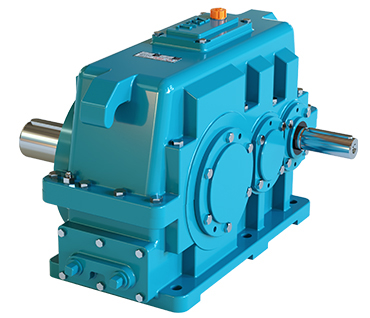
What is a Two-Stage Parallel Shaft Helical Gearbox?
A Two-Stage Parallel Shaft Helical Gearbox is a type of gearbox that uses two sets of helical gears to reduce speed and increase torque across parallel input and output shafts. The “two-stage” aspect means that the power is transmitted through two different gear sets, providing greater reduction ratios and torque capabilities.
What are the typical applications of a Two-Stage Parallel Shaft Helical Gearbox?
These gearboxes are widely used in industries like material handling, conveyors, mixers, crushers, and other heavy-duty machinery where high torque and efficiency are required. They are particularly useful in applications needing significant speed reduction while maintaining compactness.
What are the advantages of using a Two-Stage Parallel Shaft Helical Gearbox?
The main advantages include higher torque output, greater efficiency, smoother operation due to the helical gear design, and more compact size compared to single-stage gearboxes with equivalent reduction ratios.
How does the two-stage design benefit the gearbox’s performance?
The two-stage design allows for higher gear reduction ratios, which means the gearbox can deliver more torque at lower speeds. This design also distributes the load over multiple gears, reducing wear and extending the lifespan of the gearbox.
What materials are typically used in the construction of a Two-Stage Parallel Shaft Helical Gearbox?
The gears are usually made from high-strength alloy steel, while the housing is typically made from cast iron or steel. These materials ensure durability, high performance, and resistance to wear and tear.
What factors should be considered when selecting a Two-Stage Parallel Shaft Helical Gearbox?
Key factors to consider include the required torque and speed, the desired reduction ratio, the type of load, environmental conditions, and the physical space available for installation. It’s also important to consider the cooling requirements based on the operational conditions.
What are the maintenance requirements for a Two-Stage Parallel Shaft Helical Gearbox?
Regular maintenance involves checking the lubrication levels, inspecting gears and bearings for wear, ensuring proper alignment, and monitoring for any unusual noises or vibrations. Routine maintenance is essential to prevent downtime and prolong the gearbox’s life.
Can a Two-Stage Parallel Shaft Helical Gearbox be customized?
Yes, many manufacturers offer customization options such as different gear ratios, housing materials, and shaft configurations to meet specific operational requirements. Custom cooling solutions and lubrication systems can also be designed based on the application.
How does the helical gear design benefit the gearbox’s operation?
Helical gears have angled teeth that engage more gradually compared to straight-cut gears. This results in smoother power transmission, reduced noise and vibration, and higher load-carrying capacity, making the gearbox more efficient and durable.
What are the cooling options available for a Two-Stage Parallel Shaft Helical Gearbox?
Cooling options may include natural air cooling, forced air cooling, or water cooling, depending on the operational demands and heat generated during use. Proper cooling is critical to maintain performance and prevent overheating.
What are common issues that can arise with a Two-Stage Parallel Shaft Helical Gearbox?
Common issues include gear misalignment, excessive wear on gears or bearings, overheating, and lubricant leaks. Regular inspections and preventive maintenance can help mitigate these issues.
How does the two-stage design influence the installation of the gearbox?
The two-stage design typically requires precise alignment and secure mounting to ensure proper operation. The increased complexity over a single-stage gearbox means that installation should follow the manufacturer’s guidelines closely to prevent performance issues.
What is the typical lifespan of a Two-Stage Parallel Shaft Helical Gearbox?
With proper maintenance and appropriate application, a Two-Stage Parallel Shaft Helical Gearbox can last many years. The exact lifespan will depend on factors like the operating environment, load conditions, and adherence to maintenance schedules.
Are there specific installation guidelines for a Two-Stage Parallel Shaft Helical Gearbox?
Yes, following the manufacturer’s installation guidelines is essential. This includes ensuring accurate alignment, secure mounting, correct lubrication, and checking all connections and seals to prevent leaks and ensure efficient operation.
What are the typical gear reduction ratios available in a Two-Stage Parallel Shaft Helical Gearbox?
The gear reduction ratios can vary depending on the specific design, but they generally range from 10:1 to 200:1. The choice of ratio depends on the required speed reduction and torque increase for your application.