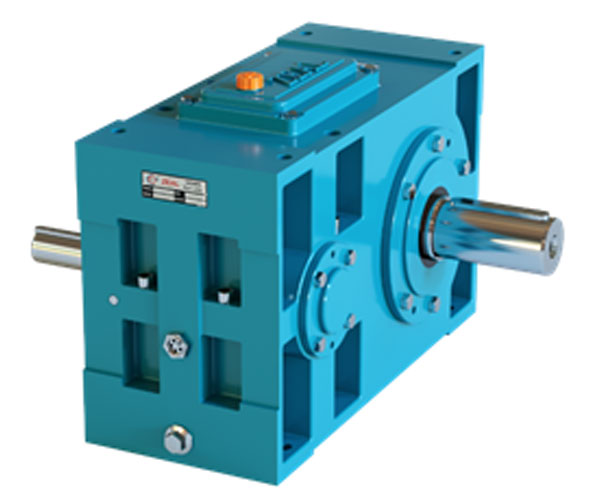
What is a Two-Stage Parallel Shaft Helical Gearbox with Solid Input and Output Shafts?
This type of gearbox uses two sets of helical gears to reduce speed and increase torque, with parallel input and output shafts that are solid rather than hollow. The solid shafts provide a robust connection for transmitting power to and from the gearbox.
What does ‘universal mounting’ mean for this gearbox?
Universal mounting means the gearbox can be installed in various orientations, such as horizontal, vertical, or inclined, making it versatile and suitable for a wide range of applications.
What are the typical applications for this gearbox?
These gearboxes are commonly used in heavy-duty industrial applications like conveyors, crushers, mixers, and pumps, where high torque and reliable power transmission are required. The solid shafts make them ideal for applications where the gearbox must be directly coupled to other components.
What are the advantages of using a Two-Stage Parallel Shaft Helical Gearbox with Solid Shafts?
The main advantages include high torque capacity, compact design, smooth and efficient power transmission due to the helical gears, and versatile mounting options. Solid shafts offer robust connections, reducing the risk of misalignment and enhancing the gearbox’s durability.
How does the two-stage design benefit this gearbox?
The two-stage design provides higher gear reduction ratios and torque output compared to single-stage gearboxes. This design also helps distribute the mechanical load across multiple gears, reducing wear and extending the gearbox’s lifespan.
What materials are used in the construction of this gearbox?
The gearbox typically features high-strength alloy steel for the gears and shafts, with a housing made from durable cast iron or steel. These materials ensure the gearbox can withstand heavy loads and harsh operating conditions.
What factors should be considered when selecting this type of gearbox?
Key factors to consider include the required torque and speed, the desired gear reduction ratio, the type of load, environmental conditions, and space constraints. Additionally, consider the alignment and mounting requirements of the connected machinery.
What are the maintenance requirements for this gearbox?
Regular maintenance involves checking and replenishing the lubrication, inspecting the gears and bearings for signs of wear, ensuring the shafts are properly aligned, and monitoring for unusual noises or vibrations that could indicate issues.
Can this gearbox be customized?
Yes, manufacturers often offer customization options such as different gear ratios, housing materials, shaft configurations, and additional cooling or lubrication features to meet specific application needs.
How does the helical gear design improve the performance of this gearbox?
Helical gears have angled teeth that engage more gradually compared to straight-cut gears. This design results in smoother and quieter operation, reduced vibration, and the ability to handle higher loads, making the gearbox more efficient and reliable.
What cooling options are available for this type of gearbox?
Cooling options can include natural air cooling, forced air cooling, or water cooling, depending on the operational demands. Adequate cooling is essential to prevent overheating, which can reduce efficiency and shorten the gearbox’s lifespan.
What are common issues that might arise with this gearbox?
Common issues include misalignment, wear on gears or bearings, overheating, and lubricant leaks. Regular maintenance and monitoring can help detect and address these issues early, preventing costly repairs or downtime.
How should this gearbox be installed?
Installation should be performed according to the manufacturer’s instructions, ensuring proper alignment of the solid shafts with the connected machinery, secure mounting, and correct lubrication. It’s important to check that all bolts and connections are tight to prevent vibrations or misalignment during operation.
What is the expected lifespan of this gearbox?
With proper maintenance and appropriate use, this type of gearbox can last many years, often exceeding a decade of reliable service, depending on the operating environment and load conditions.
What gear reduction ratios are typically available for this gearbox?
The gear reduction ratios for a two-stage parallel shaft helical gearbox can range from 10:1 to 200:1, depending on the specific design and application requirements. These ratios determine the output speed and torque relative to the input.