
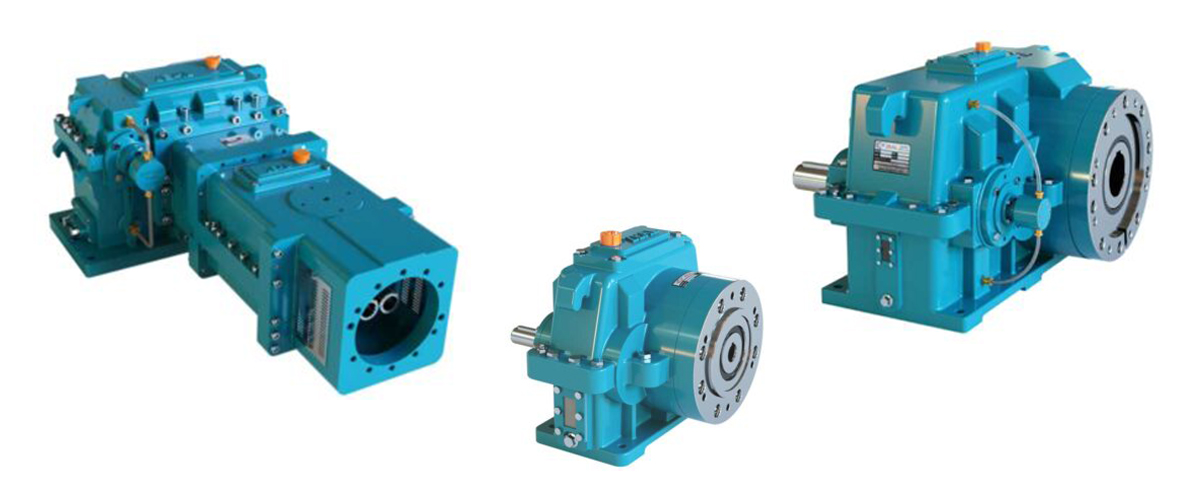
Your extruder line is running — then the temperature alarm trips. Within minutes, production stops, technicians scramble, and every idle minute costs money. Extruder gearbox overheating is one of the most common and costly failures in plastic processing facilities worldwide, yet it is almost entirely preventable with the right knowledge and maintenance practices. When a gearbox runs too hot, the consequences extend far beyond a simple temperature reading. Lubricant viscosity breaks down, gear surfaces lose their protective oil film, bearing clearances tighten, and — if the situation is not corrected — the result is catastrophic gear or bearing seizure. A failure that could have been resolved with a US $50 oil change can escalate into a US $15,000 gearbox replacement and days of unplanned downtime. In this blog, you will learn the precise causes of extruder gearbox overheating, how to diagnose each one, and a proven step-by-step protocol to fix and prevent the problem permanently. Whether you are a maintenance technician monitoring temperatures on the shop floor or a plant engineer responsible for long-term equipment reliability, this guide will give you everything you need.
Why Extruder Gearbox Temperature Matters
The gearbox is the mechanical heart of every extruder. It converts the high-speed, low-torque output of the drive motor into the low-speed, high-torque rotation that drives the extruder screw. This torque conversion generates heat — an unavoidable by-product of mechanical work. Under normal operating conditions, this heat is managed by the gearbox’s lubrication and cooling systems. The problem begins when heat input exceeds heat dissipation.
What Is the Safe Operating Temperature?
Most helical extruder gearboxes are designed to operate with an oil sump temperature between 40 °C and 70 °C. When oil temperature consistently exceeds 80 °C, lubricant degradation accelerates significantly. Above 95 °C, emergency shutdown is required to prevent irreversible damage to gears, bearings, and seals.
| Condition | Oil Temperature Range | Action Required |
| Normal Operation | 40 °C – 70 °C | None — routine monitoring |
| Elevated — Watch | 71 °C – 85 °C | Inspect cooling system and oil level immediately |
| Overheating — Act | 86 °C – 95 °C | Reduce load, flush and replace oil, check bearings |
| Critical — Shutdown | Above 95 °C | Shut down immediately — risk of gear and bearing seizure |
Why Heat Is the Primary Enemy of Gearbox Life
Heat affects every component inside the gearbox simultaneously:
- Lubricant oil oxidises and loses its viscosity index, reducing the protective oil film on gear teeth
- Thermal expansion reduces bearing clearances, increasing friction and generating more heat in a destructive cycle
- Seals harden, crack, and begin leaking oil — leading to both lubrication starvation and contamination entry
- Gear tooth micro-pitting and surface fatigue accelerate at elevated temperatures, especially in hardened steel alloys
- The structural integrity of the gearbox housing itself is stressed, potentially causing distortion in precision-bored bearing housings
Warning: Industry Insight: Studies in gear tribology consistently show that for every 10 °C rise above the recommended oil operating temperature, lubricant life is approximately halved. A gearbox running at 90 °C may degrade lubricant 4× faster than one running at 70 °C.
Top Causes of Extruder Gearbox Overheating
Understanding why overheating occurs is the first step toward preventing it. The table below categorises the eight most common causes by severity and early warning signs.
| # | Cause | Severity | Warning Sign |
| 1 | Lubrication failure or oil degradation | Critical | Burnt smell, rising oil temperature |
| 2 | Overloading beyond rated torque | High | Vibration, abnormal noise |
| 3 | Blocked or failed cooling system | High | Oil temp gauge spike |
| 4 | Worn or damaged bearings/gears | High | Grinding noise, elevated heat at housing |
| 5 | Incorrect oil grade or contaminated lubricant | Medium | Discoloured oil, foaming |
| 6 | Inadequate ventilation around gearbox | Medium | Ambient heat build-up |
| 7 | Misalignment between gearbox and extruder screw | Medium | Uneven wear, seal leaks |
| 8 | Excessive duty cycle without cooldown | Low-Medium | Gradual temperature rise over shifts |
Lubrication Failure — The Number One Cause
Lubrication failure is responsible for the majority of premature gearbox failures in extruder applications. This does not simply mean running out of oil — it includes oil that has degraded to the point where it can no longer protect gear and bearing surfaces. In heavy-duty plastic processing, gearbox oil should typically be analysed every 1,000 to 2,000 operating hours and replaced according to the manufacturer’s schedule or when oil analysis shows oxidation, water contamination, or viscosity deviation beyond ±15% of the specified grade.
Overloading Beyond Rated Torque
Every gearbox has a rated output torque and a service factor that accounts for shock loading. When extruder operators run oversized screws, process high-viscosity materials without adequate decompression zones, or run the screw at maximum speed continuously, the gearbox may experience torques beyond its design rating. The immediate effect is elevated friction heat at the gear mesh. The long-term effect is accelerated surface fatigue and bearing wear.
Blocked or Failed Cooling Systems
Many medium and large extruder gearboxes use an oil-to-water heat exchanger to dissipate thermal energy from the lubricant. If this heat exchanger becomes fouled with mineral scale, coolant algae, or debris — or if the coolant flow rate drops due to a worn pump or partially closed valve — the oil temperature will steadily rise even if all other parameters are normal. Regular flushing of the heat exchanger circuit is essential in hard-water areas or environments with airborne contaminants.
Incorrect Oil Grade or Contaminated Lubricant
Using an oil with a viscosity that is too low for the application allows the protective oil film to shear away under high contact pressure. Using too high a viscosity increases churning losses, which themselves generate heat. Most extruder gearbox manufacturers specify ISO VG 220 or ISO VG 320 gear oil — always verify the exact specification in your technical manual before changing oil brands or grades.
Info: Key Fact: Water contamination of as little as 0.1% in gearbox oil can reduce bearing fatigue life by up to 50%. Oil appearing milky or cloudy is a red-flag indicator of coolant or condensation ingress.
How to Fix and Prevent Gearbox Overheating
When an overheating event occurs, responding systematically is critical. Below is an 8-step diagnostic and corrective action protocol used by experienced maintenance teams in plastic processing facilities.
Step-by-Step Overheating Response Protocol
Step 1 – Shut Down Safely
If oil temperature exceeds 90–95 °C, initiate a controlled shutdown. Do not allow the extruder to run at high load with the gearbox in an overheating condition. Allow the unit to cool to ambient before inspection.
Step 2 – Check Oil Level and Quality
Take an oil sample from the drain plug. Check the oil level on the sight glass. Low oil level causes both lubrication starvation and reduced thermal mass, accelerating temperature spikes. Visually inspect the oil sample for colour, cloudiness, metallic particles, or foam.
Step 3 – Inspect the Cooling Circuit
Check coolant inlet temperature, flow rate, and confirm the heat exchanger is not fouled. A simple pressure-drop test across the heat exchanger will reveal excessive fouling. Flush with an appropriate descaling agent if scale build-up is found.
Step 4 – Verify Oil Specification
Confirm the oil grade in the sump matches the manufacturer’s recommendation. If the oil has been changed recently, verify the correct viscosity was used. Cross-check the oil supplier’s data sheet against the gearbox manual.
Step 5 – Check for Overloading
Review the extruder’s motor current draw and torque logs if available. Compare against the gearbox’s rated output torque. If the load is consistently at or above 90% of rated torque, reduce screw speed or process batch sizes, or upgrade to a higher-rated gearbox.
Step 6 – Inspect Bearings and Gears
If oil samples show metallic particles or the noise profile has changed, arrange a borescope or hands-on inspection of accessible bearings. Premature bearing failure generates heat locally before the overall sump temperature reflects the problem.
Step 7 – Check Alignment
Use a dial indicator or laser alignment tool to verify the gearbox output shaft is correctly aligned with the extruder screw thrust bearing assembly. Misalignment as small as 0.05 mm can cause significant additional bearing loading and heat generation.
Step 8 – Oil Flush and Refill
After corrective actions are complete, flush the gearbox with a low-viscosity flushing oil, drain fully, and refill with fresh oil of the correct specification. Run the gearbox on light load for 30 minutes and verify temperature stabilisation before returning to full production.
Preventive Maintenance Schedule to Prevent Overheating
Prevention is always more cost-effective than repair. The following schedule is recommended for extruder gearboxes in continuous-duty plastic processing applications:
| Interval | Maintenance Task |
| Daily | Check oil level on sight glass; note operating temperature reading; listen for unusual noise |
| Weekly | Verify coolant flow rate and inlet temperature; clean external fins/vents if air-cooled |
| Monthly | Check oil sample for colour and odour; inspect all hose connections and fittings for leaks |
| Every 1,000 hrs | Full oil analysis (viscosity, TAN, water content, particle count) |
| Every 2,000 hrs | Oil drain and refill with fresh oil of correct specification; clean heat exchanger |
| Annually | Full gearbox inspection including bearing clearances, gear tooth contact pattern check, seal replacement |
How Helical Extruder Gearboxes Manage Heat Better
If your current extruder gearbox struggles with thermal management despite rigorous maintenance, the underlying issue may be the gearbox design itself. Standard spur or older helical designs can generate significantly more heat per kilowatt of power transmitted than modern precision-helical gearboxes.
Our helical extruder gearboxes are engineered specifically for the thermal demands of continuous-duty plastic processing. Here is how they address overheating at the design level:
- Precision-ground helical gear profiles reduce sliding friction at the gear mesh — the primary internal heat source — by up to 30% compared to conventional hobbed gears.
- Integrated oil-to-water heat exchangers are standard on units above 22 kW, ensuring effective thermal dissipation even in high-ambient-temperature environments.
- Optimised lubrication channels ensure oil reaches critical contact zones under full-load conditions, maintaining the required oil film thickness across the entire operating speed range.
- High-performance synthetic-compatible oil sumps allow the use of premium synthetic gear oils, which offer significantly better thermal stability and longer drain intervals than mineral oils.
- Thermally isolated bearing housings prevent heat migration from the gear mesh zone to the thrust bearing assembly, protecting the bearings that carry extruder screw axial loads.
Our Solution: Thousands of extruder operators across PVC pipe, HDPE film, and masterbatch compounding applications rely on our gearboxes for dependable thermal performance and extended service intervals. Enquire about the right specification for your extruder diameter and L/D ratio.
Frequently Asked Questions
Q1. What is the maximum safe operating temperature for an extruder gearbox?
The maximum safe oil sump temperature for most extruder gearboxes is 80–90 °C, depending on the oil grade and gearbox design. Most manufacturers set an alarm threshold at 80 °C and a shutdown threshold at 90–95 °C. Operating above these limits causes lubricant degradation, accelerated bearing wear, and risks gear seizure. Always refer to your specific gearbox manual for the exact limits applicable to your model and oil specification.
Q2. How often should I change the oil in my extruder gearbox?
For mineral gear oil, most manufacturers recommend an initial oil change at 4000–4500 operating hours on a new or overhauled gearbox to remove break-in metallic particles. Subsequent changes are typically every 6,000–7,000 operating hours, or annually — whichever comes first. If the gearbox operates in high-temperature environments, processes abrasive materials, or runs at high load factors, oil change intervals should be shortened. Oil analysis is the most reliable method to determine the optimal drain interval for your specific conditions.
Q3. Can I add a cooling system to my existing gearbox if it doesn’t have one?
In many cases, yes. External oil-to-air or oil-to-water coolers can be retrofitted to extruder gearboxes that were originally designed without integral cooling. This involves adding an oil pump, heat exchanger, thermostatic valve, and associated pipework. However, the feasibility depends on the gearbox housing design and available connections. Consult the gearbox manufacturer or a specialist before retrofitting, as incorrect cooling circuit design can cause thermal shock or oil aeration issues.
Q4. What type of oil should I use in an extruder gearbox?
Most extruder gearboxes require ISO VG 220 or ISO VG 320 mineral gear oil conforming to DIN 51517 Part 3 (CLP specification) or equivalent. Some high-speed or high-load applications benefit from synthetic PAO (Polyalphaolefin) gear oils of equivalent viscosity grade, which offer better thermal stability and longer service life. Never mix mineral and synthetic oils, and always verify the oil specification in your gearbox technical manual before making any changes.
Q5. What are the early warning signs that my extruder gearbox is about to overheat?
Early warning signs include a steady upward drift in oil temperature readings over several shifts without changes in ambient conditions or load; unusual noise such as whining, grinding, or increased vibration from the gearbox housing; discolouration or strong odour in the oil sampled from the sight glass; and oil temperature readings that are slow to stabilise after start-up. Installing a continuous temperature logger with an alarm set at 75 °C gives your team advance warning before a shutdown-level condition develops.
Q6. How does gearbox misalignment cause overheating?
When the gearbox output shaft and the extruder screw coupling are misaligned, the constant cyclical loading creates additional stress on the bearings, particularly the front (screw-side) radial and axial bearings. This additional bearing load converts directly into friction heat. In severe misalignment cases, the heat generated at the affected bearings can raise local temperatures far above the oil sump average, causing localised lubrication breakdown before the temperature sensor in the oil sump reflects the issue.
Q7. Does the type of plastic material being processed affect gearbox temperature?
Yes, significantly. High-viscosity materials such as rigid PVC, HDPE at high MFI, PEEK, or filled compounds require higher screw torque, which directly increases the mechanical load on the gearbox. Materials that require high melt temperatures can also indirectly raise the extruder barrel zone temperatures, increasing the ambient heat around the gearbox. When processing high-viscosity or high-load materials, it is advisable to reduce screw speed, monitor gearbox temperature more frequently, and verify the gearbox’s rated torque capacity before production begins.
Conclusion
Extruder gearbox overheating is a manageable problem — not an inevitable one. The vast majority of overheating events are caused by preventable factors: degraded lubricant, blocked cooling circuits, operating beyond rated torque, or incorrect oil specification. By understanding these root causes and implementing a structured maintenance programme, plant engineers and maintenance technicians can virtually eliminate unplanned gearbox downtime.
The key actions to take away from this blog:
- Monitor gearbox oil temperature continuously — install a temperature logger with an alarm at 75 °C
- Change oil on schedule and conduct oil analysis to detect problems before they cause failures
- Inspect and flush the cooling circuit every 2,000 hours or annually
- Verify oil specification matches the gearbox manufacturer’s recommendation
- Check alignment whenever the gearbox or extruder is disturbed for any reason
- If overheating persists despite correct maintenance, evaluate an upgrade to a modern helical gearbox designed for your application’s torque and speed requirements
Ready to upgrade to a gearbox that runs cooler and lasts longer? Contact our engineering team today for a free technical consultation and product recommendation tailored to your extruder specifications.
