
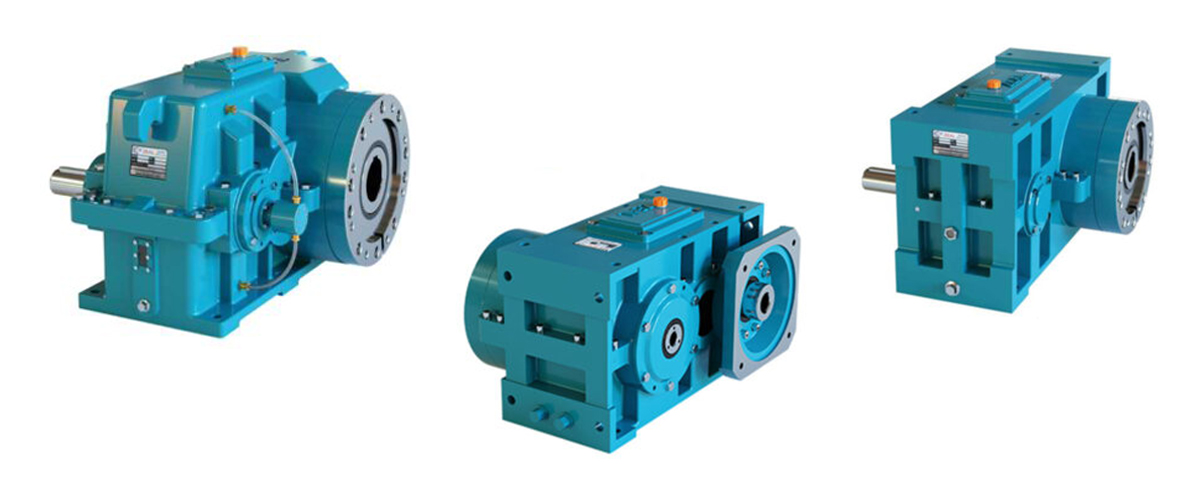
In any plastic extrusion line — whether it produces pipes, films, sheets, cables, profiles, or granules — the gearbox sits at the mechanical core of the entire operation. It is the single component that determines how effectively power motor is converted into the precise, sustained torque that drives the extruder screw. And yet, despite its central importance, the internal design and individual components of a plastic extruder gearbox remain poorly understood by many of the engineers and technicians who work alongside them every day. This lack of understanding carries a real cost. Engineers who do not know how their gearbox is designed cannot make informed decisions when specifying a replacement. Maintenance technicians who do not understand which component performs which function cannot prioritise inspections or identify the early warning signs of developing failure. Procurement managers who cannot read a gearbox specification sheet end up purchasing on price alone — often with expensive consequences. This complete guide changes that. We will take you through every aspect of plastic extruder gearbox design — from the fundamental engineering principles that govern gear stage design and gear ratio calculation, through every key internal component and its specific function, to the design features that separate a high-performance extruder gearbox from a standard industrial unit. By the end of this guide, you will have the knowledge to specify, evaluate, maintain, and troubleshoot any plastic extruder gearbox with confidence.
The Engineering Purpose of an Extruder Gearbox
To understand gearbox design, you must first clearly understand what the gearbox is required to do. The extruder gearbox serves three distinct and simultaneous engineering functions, each of which places specific demands on its design:
- Speed Reduction: A standard AC motor operates at 960 to 1,480 RPM depending on pole count and supply frequency. An extruder screw typically needs to rotate at 15 to 150 RPM depending on screw diameter, material, and process requirements. The gearbox reduces the motor speed to the correct screw speed through a calculated sequence of gear stages.
- Torque Multiplication: As speed is reduced through each gear stage, torque is amplified in inverse proportion to the speed reduction. The gearbox therefore transforms the motor’s relatively modest torque into the very high output torque required to push viscous plastic melt through the extruder barrel under pressures of 200 to 700 bar.
- Axial Thrust Absorption: As the extruder screw pushes plastic melt forward towards the die, Newton’s third law dictates that an equal and opposite reaction force is exerted back along the screw axis towards the gearbox. This axial thrust force — which can reach hundreds of kilonewtons in large extruders — must be completely absorbed by the gearbox thrust bearing system without being transmitted back to the motor bearing.
Every design decision made in the construction of a plastic extruder gearbox — the number of gear stages, the gear tooth geometry, the bearing selection, the housing design, the lubrication system — flows from these three fundamental engineering requirements.
Key Engineering Principle
Power (kW) = Torque (Nm) x Speed (RPM) / 9,550
At constant power: halving the speed doubles the torque.
A gearbox with a 30:1 ratio reduces speed by 30x and multiplies torque by ~30x (minus efficiency losses).
This is the fundamental relationship that defines all gearbox design for extrusion applications.
Gear Stage Design — How Speed Reduction is Achieved
The total speed reduction required in a plastic extruder gearbox is too large to be achieved in a single gear stage — it must be distributed across two or three sequential stages of helical gear pairs. Understanding how this multi-stage reduction is designed is fundamental to understanding the gearbox as a whole.
What is a Gear Stage?
A gear stage is a meshing pair of gears — one smaller (the pinion or driver gear) and one larger (the wheel or driven gear) — mounted on parallel shafts within the gearbox housing. The ratio of teeth between the driven gear and the driver gear determines the speed reduction and torque multiplication achieved at that stage.
For example, if the driver pinion has 20 teeth and the driven wheel gear has 80 teeth, the gear ratio at that stage is 80/20 = 4:1. The output shaft of that stage turns four times slower than the input shaft, and delivers approximately four times more torque (less a small efficiency loss of 1 to 2% per stage).
| Configuration | Typical Gear Ratio | Best Application | Design Characteristics |
| Two-Stage | 6:1 to 25:1 | Medium-speed extrusion lines | Compact, fewer components, lower cost |
| Three-Stage | 20:1 to 100:1 | Low-speed, high-torque heavy extrusion | Higher torque capacity, more complex, larger housing |
Helical Gear Tooth Geometry
The gear teeth in a plastic extruder gearbox are cut with a specific helix angle — typically between 15 and 30 degrees — relative to the gear shaft axis. This helix angle is a critical design parameter that determines the balance between axial load generation (higher helix angle = more axial load on bearings) and tooth contact ratio (higher helix angle = more teeth in contact simultaneously = smoother, quieter transmission).
The tooth profile follows an involute curve — the mathematical curve that ensures the meshing gear teeth maintain a constant velocity ratio throughout their engagement, regardless of small variations in centre distance. This involute profile is precision-ground on all quality extruder gearbox gears to achieve the tight tolerances required for smooth, efficient power transmission.
Gear Material and Surface Treatment
The gears in a plastic extruder gearbox must withstand very high contact stresses continuously over long service periods. The material selection and surface treatment are therefore critical design decisions:
- Base Material: High-grade alloy steel — typically 20MnCr5, 16MnCr5, or 18CrNiMo7-6 — provides the combination of core toughness and surface hardenability required for gear duty.
- Case Hardening: The gear blanks are carburised and case-hardened to achieve a surface hardness of 58 to 62 HRC to a depth of 0.8 to 1.5 mm. This hard surface layer provides excellent resistance to pitting, wear, and contact fatigue while the tough core absorbs shock loads.
- Precision Grinding: After hardening, all gear tooth flanks are precision-ground to DIN quality class 5 or better. This removes heat-treatment distortion and produces the geometric accuracy required for efficient, quiet meshing.
- Phosphating or Manganese Coating: Some manufacturers apply a phosphate or manganese coating to new gears. This surface treatment provides a micro-porous layer that retains oil during the critical running-in period, reducing the risk of scuffing damage on first operation.
The 12 Core Components of a Plastic Extruder Gearbox
A complete plastic extruder gearbox is made up of twelve distinct component groups, each serving a specific and essential function. Understanding each component — what it does, how it is designed, and what failure looks like — is the foundation of effective gearbox management.
Component 1 — Input Shaft
The input shaft is the entry point for motor power into the gearbox. It receives rotational energy directly from the motor, either through a flexible coupling, a belt drive, or a direct flange mount. The input shaft is precision-machined from high-tensile alloy steel and is supported by two radial bearings — one at each end — that maintain accurate alignment under the radial loads generated by gear mesh forces.
The input shaft carries the first-stage drive pinion gear, which is either machined integrally with the shaft (a shaft-pinion design) or press-fitted and keyed onto the shaft. The shaft-pinion design is preferred in high-quality extruder gearboxes as it eliminates the potential for key fretting and provides a more rigid connection between shaft and gear.
Component 2 — Input Stage Helical Pinion Gear
The input stage pinion is the smallest gear in the gearbox and the first in the speed reduction sequence. It has the fewest teeth of any gear in the gearbox and therefore rotates fastest. Because it transmits the full input power at high speed, its tooth surfaces experience high sliding velocities and significant contact stresses, making precise heat treatment and surface finish critical at this position.
Component 3 — Intermediate Shaft(s) and Gear Sets
In a two-stage gearbox, there is one intermediate shaft carrying two gears: the large driven gear from stage one and the small driving pinion for stage two. In a three-stage gearbox, there are two intermediate shafts. Each intermediate shaft is supported by a pair of precision roller or taper roller bearings and is carefully aligned to maintain the correct centre distance between gear pairs.
The design of intermediate shaft bearings is particularly important in extruder gearboxes. Helical gears generate axial forces as well as radial forces due to their helix angle. The bearing selection must account for both the radial gear mesh forces and the axial components generated by the helix angle, otherwise bearing life will be severely reduced.
Component 4 — Output Stage Helical Wheel Gear
The output stage wheel gear is the largest gear in the gearbox. It has the most teeth, rotates slowest, and delivers the highest torque. Because this gear operates at low speed and high torque, the dominant failure mode is not surface fatigue (pitting) but tooth root bending fatigue — the failure of the gear tooth at its base under the high bending moment generated by the large tangential forces.
For this reason, the output stage gear is designed with a wider face width and a larger module (tooth size) than the input stage gears, providing greater bending strength at the tooth root. The gear module — the ratio of pitch diameter to number of teeth — is a key design parameter that determines tooth size and load capacity.
Component 5 — Output Shaft
The output shaft is the most heavily loaded shaft in the gearbox. It must simultaneously carry the large output wheel gear, transmit the maximum output torque to the extruder screw coupling, and react against the enormous axial thrust force generated by the extruder screw. It is manufactured from high-tensile alloy steel, typically heat treated to a core tensile strength of 900 to 1,100 MPa.
The output shaft has a precisely machined bore or spline at its exposed end for coupling to the extruder screw shaft. The dimensional accuracy of this coupling interface is critical — any runout or misalignment will be amplified through the length of the extruder screw, causing vibration and uneven wear on the barrel and screw flights.
Component 6 — Thrust Bearing Assembly
The thrust bearing assembly is arguably the most application-specific and critical component in the entire extruder gearbox design. It is what separates an extruder gearbox from a standard industrial gearbox, and its correct design and rating is the single most important factor in gearbox reliability for extrusion duty.
The thrust bearing must absorb the full axial thrust force generated as the extruder screw pushes plastic melt towards the die. In a large extruder processing rigid PVC or HDPE at high throughput, this axial force can exceed 500 kilonewtons. The thrust bearing must sustain this load continuously — not for minutes or hours, but for days and weeks of uninterrupted production.
Two bearing types are commonly used in extruder thrust bearing assemblies:
- Spherical Roller Thrust Bearings: Able to handle both axial and radial loads simultaneously, with good tolerance for misalignment. They are the most common choice in medium to large extruder gearboxes due to their high axial load capacity and robust design.
- Tapered Roller Bearing Pairs: Arranged in back-to-back or face-to-face configuration to handle bidirectional axial loads. Used in smaller gearboxes and applications where very compact thrust bearing design is required.
Component 7 — Radial Bearings (Main and Intermediate Shafts)
In addition to the thrust bearing assembly on the output shaft, all shafts in the gearbox require radial bearings to maintain shaft position and absorb gear mesh radial forces. The bearing selection at each shaft position is determined by the combination of radial load, axial load, speed, and required service life.
Extruder gearboxes for continuous-duty operation are typically designed for a minimum bearing calculated life (L10h) of 20,000 to 50,000 operating hours. The L10h life is the life that 90% of a group of identical bearings will reach or exceed under the specified load and speed conditions. Achieving this bearing life requires both correct bearing selection and consistent lubrication maintenance.
Component 8 — Gearbox Housing
The gearbox housing serves three essential functions: it maintains the precise geometric alignment of all shafts and gears relative to each other; it contains the lubrication oil; and it provides the structural rigidity to react all gear mesh forces, bearing loads, and external coupling forces without deflection that could disturb gear alignment.
Housing materials used in extruder gearbox design include:
- Cast Iron (GG25/GGG50): The most common choice for medium to large extruder gearboxes. Cast iron provides excellent rigidity, good vibration damping, ease of machining to tight tolerances, and good thermal conductivity for heat dissipation. GGG50 (ductile iron) is preferred for applications with shock loads.
- Fabricated Steel: Used for very large extruder gearboxes where pattern costs for large castings are prohibitive, or where the gearbox geometry is non-standard. Fabricated housings are welded and stress-relieved before precision machining of bearing bores.
The bearing bores in the housing are line-bored after the housing is assembled — meaning the bore for all bearings on a given shaft is machined in a single operation without repositioning the housing. This ensures that all bearing bores are co-axial to within a few micrometres, which is essential for accurate shaft alignment and uniform bearing loading.
Component 9 — Oil Sump and Lubrication System
The lubrication system is one of the most critical design elements in an extruder gearbox. More gearbox failures can be attributed to lubrication inadequacy — whether from low oil level, wrong oil type, degraded oil, or oil contamination — than to any other single cause. The lubrication system design must ensure that every gear mesh surface and every bearing receives an adequate, clean, cool film of oil at all times during operation.
Lubrication system designs used in extruder gearboxes include:
- Splash Lubrication: The standard system for most medium-sized extruder gearboxes. The rotating gears dip into the oil sump and splash oil onto gear surfaces, shaft walls, and into bearing positions. Simple, reliable, and maintenance-free provided the correct oil level is maintained.
- Forced-Feed (Pressure) Lubrication: A dedicated oil pump (gear pump or piston pump) circulates oil under pressure to all bearing positions and gear meshes through a network of internal drillings and external pipes. Used in high-power, high-speed, or high-ambient-temperature applications where splash lubrication cannot guarantee adequate oil delivery to all critical surfaces.
- Combined Splash and Forced-Feed: Many large extruder gearboxes use splash lubrication for the gear meshes and forced-feed lubrication specifically for the thrust bearing assembly and output shaft bearings, which are most critical for reliability.
Component 10 — Oil Cooling System
Heat is generated in the gearbox through the mechanical losses in gear meshing and bearing friction. Although helical gearboxes are highly efficient (95 to 98%), the power losses in a large extruder gearbox can still amount to several kilowatts — enough to raise the oil temperature significantly if not managed. Most extruder gearboxes include one or more of the following thermal management provisions:
- Finned Housing Surfaces: Cast iron housings with external fins increase the surface area available for natural convective heat dissipation. Effective for small to medium gearboxes in moderate ambient temperatures.
- Internal Water Cooling Coil: A coiled tube carrying cooling water is immersed in the oil sump. The water absorbs heat from the oil and carries it away to a cooling water circuit. Effective, compact, and widely used in medium to large extruder gearboxes.
- External Oil Cooler (Heat Exchanger): In forced-feed lubrication systems, the oil is pumped through an external shell-and-tube or plate heat exchanger before being returned to the gearbox. Provides the most precise oil temperature control and is used in very high-power or high-ambient-temperature applications.
Component 11 — Shaft Seals
Shaft seals are installed at every point where a shaft exits the gearbox housing — at the input shaft where the motor coupling attaches, and at the output shaft where the extruder screw coupling is fitted. The seals perform two equally important functions: they prevent gearbox oil from leaking out along the rotating shaft surface, and they prevent contaminants — plastic dust, moisture, and airborne particles — from entering the gearbox and contaminating the oil.
Seal types used in extruder gearboxes include:
- Radial Lip Seals (Oil Seals): The most common seal type. A flexible rubber lip, typically reinforced with a garter spring, runs against the shaft surface under slight radial preload. Effective at low to moderate shaft speeds and provides good resistance to contaminant ingress.
- V-Ring Seals: A flexible rubber ring fitted to the shaft that seals against a counterface on the housing. Used as a secondary seal or as the primary seal in contaminated environments where a conventional lip seal would wear rapidly.
- Labyrinth Seals: A non-contact seal formed by a series of narrow grooves and ridges between the rotating shaft and the stationary housing. Used as a primary or secondary seal in high-speed, high-temperature, or heavy-contamination applications where contact seals would have short life.
Component 12 — Breather / Vent Assembly
When a gearbox is running, the oil and internal air heat up and expand. Without provision for this pressure increase, the differential pressure across the shaft seals would force oil past the seal lips and cause leakage. A breather assembly — a small valved vent that allows air to flow in and out of the gearbox housing while preventing contaminant ingress — equalises the internal pressure with the atmosphere and protects the shaft seals from pressure-induced leakage.
Quality extruder gearboxes use a filtered breather with a desiccant or filter element that prevents airborne particles and moisture from entering through the vent. The breather position on the housing is a detail that is often overlooked but is important — it should be located at a high point on the housing where only air, not oil, is in contact with the vent element.
Gearbox Housing and Structural Design
The housing design of a plastic extruder gearbox goes far beyond simply providing an enclosure for the internal components. It is a precision structural element that must maintain the exact geometric relationships between all shafts and gears throughout the full operating load range and across the expected temperature range of the gearbox.
Split Housing vs Solid Housing Design
Extruder gearboxes are manufactured with either a horizontally split housing or a solid (non-split) housing, each with specific advantages:
- Horizontally Split Housing: The housing is divided at the horizontal centreline into an upper and lower half, bolted together. This design allows the complete gear and shaft assembly to be lowered into the lower half during assembly, and provides easy access to all internal components for inspection and maintenance without removing the gearbox from the machine. The split joint must be precision-ground to maintain alignment and sealed with a liquid gasket compound to prevent oil leakage at the joint face.
- Solid (One-Piece) Housing: The housing is cast or fabricated as a single piece with removable end covers. Provides greater structural rigidity than a split housing of equivalent material and wall thickness. Used in smaller gearboxes and in applications where the higher rigidity justifies the more difficult internal access.
Bearing Bore Accuracy and Shaft Alignment
The most critical dimension in the entire housing is the accuracy of the bearing bores — the bored holes in the housing walls that locate the bearing outer rings and therefore determine the shaft centre positions. The centre distance between parallel shafts must be maintained to within ±0.01 mm to ensure that the gear pairs mesh at the correct pitch circle diameter with the correct backlash.
Excessive centre distance increases backlash and reduces load-carrying capacity. Insufficient centre distance causes tight mesh, overheating, and rapid gear wear. Housing rigidity under load is therefore not just a structural requirement — it directly affects gear performance and service life.
As the comparison clearly shows, the helical gearbox outperforms alternative types across every criterion that matters specifically for plastic extrusion: high efficiency, low noise, very low vibration, excellent continuous-duty suitability, and superior thrust load handling. No other common gearbox type matches this combination of characteristics for the specific demands of a plastic extrusion line.
Lubrication System Design — A Deeper Look
Given that lubrication failure is the primary cause of premature extruder gearbox failure, the lubrication system deserves more detailed attention than is usually given to it in standard product documentation.
Oil Viscosity Selection
The oil viscosity grade is the single most important lubrication parameter. For most plastic extruder gearboxes operating at standard industrial temperatures (40 to 80 degrees Celsius oil temperature), the recommended viscosity is ISO VG 220 or ISO VG 320. The correct viscosity depends on the operating oil temperature and the gear peripheral speed:
The key takeaway from this table is that materials with higher melt viscosity — particularly rigid PVC and HDPE — demand gearboxes with higher torque ratings and more robust thrust bearing assemblies. Always specify your gearbox based on the most demanding material you will process, not on an average across your product range.
| Gearbox Size / Speed | Typical Oil Temp (°C) | Recommended Viscosity | Oil Type |
| Small / High Speed | 40 – 60°C | ISO VG 150 or VG 220 | Mineral EP gear oil |
| Medium / Standard Speed | 50 – 70°C | ISO VG 220 or VG 320 | Mineral or Synthetic EP |
| Large / Low Speed | 60 – 80°C | ISO VG 320 or VG 460 | Synthetic PAO gear oil |
| High Ambient Temp | 70 – 90°C | ISO VG 460 | Synthetic PAO — recommended |
Oil Change Intervals and Oil Condition Monitoring
Even with the correct oil type and viscosity, oil does not last indefinitely. Mineral oils should be changed every 3,000 to 5,000 operating hours. High-quality synthetic PAO oils can last 8,000 to 12,000 hours between changes. However, these intervals assume normal operating conditions — contamination, overheating, or overloading can degrade oil far more rapidly.
Many serious extruder operators now use periodic oil sample analysis — sending a small oil sample to a laboratory for spectrometric analysis — to monitor the actual condition of the gearbox oil. This analysis can detect elevated metal particle content (indicating gear or bearing wear), water contamination, oil oxidation, and changes in viscosity, allowing maintenance to be scheduled on actual oil condition rather than a fixed time interval.
Sealing System Design
The sealing system of a plastic extruder gearbox must address a particularly challenging combination of requirements. The input and output shaft seals must retain oil against the centrifugal action of a rotating shaft, while simultaneously excluding plastic dust and granule fragments from the extrusion environment — fragments that are highly abrasive and can rapidly cut through a conventional rubber lip seal if they reach the seal contact area.
Best-practice sealing design for plastic extruder gearboxes typically uses a multi-stage sealing arrangement at the output shaft:
- Primary Seal: A high-quality fluoroelastomer (FKM) lip seal rated for the operating temperature range, running against a precision-ground and hardened shaft surface. FKM rubber provides superior resistance to heat and chemical degradation compared to standard NBR rubber seals.
- Secondary Seal or Shield: A labyrinth groove or V-ring seal positioned outboard of the primary seal. This secondary element acts as a slinger to throw off plastic dust before it can reach the primary seal, dramatically extending primary seal service life.
Seal Housing Geometry: The housing bore surrounding the seal is designed with a small positive air gap between the shaft and housing on the outboard side of the labyrinth. This prevents dust from being packed against the seal face by the rotation of the shaft.
Thermal Management and Cooling
Thermal management is a frequently underestimated aspect of extruder gearbox design. The consequences of inadequate thermal management extend far beyond simple overheating — elevated operating temperatures accelerate oil oxidation (reducing oil life by roughly half for every 10°C rise above design temperature), reduce the viscosity of the oil (potentially causing inadequate oil film thickness at gear meshes and bearings), and accelerate the degradation of shaft seals.
A well-designed thermal management system for a plastic extruder gearbox should maintain oil sump temperature below 80°C under all normal operating conditions. Exceeding 90°C on a sustained basis with mineral oil is a warning condition that requires immediate investigation. With synthetic PAO oil, the maximum safe continuous oil temperature is higher — typically up to 100°C — but the principle of monitoring and controlling oil temperature remains equally important.
Thermal Management Best Practices
Install a thermometer or temperature gauge in the oil sump — check it at the start of every shift.
Clean the gearbox housing surfaces and cooling fins regularly — plastic dust is an effective thermal insulator.
Check water flow rate and temperature in cooling coil systems every month.
If oil temperature consistently exceeds 80°C, investigate the cause before damage occurs.
Consider upgrading to synthetic PAO oil if high ambient temperatures are unavoidable.
Design Differences: Single Screw vs Twin Screw Gearboxes
The design differences between single-screw and twin-screw extruder gearboxes are substantial and go well beyond the simple addition of a second output shaft. Understanding these differences is important for anyone specifying or managing gearboxes across both machine types.
| Design Aspect | Single Screw Gearbox | Twin Screw Gearbox |
| Output Shafts | One output shaft | Two parallel output shafts at fixed centre distance |
| Shaft Synchronisation | Not required | Synchronisation gears maintain exact phase relationship between shafts |
| Centre Distance | Standard industrial dimensions | Matched to specific extruder screw centre distance — often non-standard |
| Thrust Bearing | Single large thrust bearing on output shaft | Separate thrust bearing required on each output shaft |
| Torque Distribution | All torque through single output | Torque split 50/50 between two output shafts |
| Rotation Direction | Single direction | Co-rotating (same direction) or counter-rotating (opposite directions) |
| Gear Arrangement | Simpler — gear pairs in series | More complex — includes synchronisation gear set plus main gear stages |
| Housing Design | Rectangular or square form factor | Elongated to accommodate two output shaft positions |
| Maintenance Access | Straightforward | More complex — synchronisation timing must be re-established after disassembly |
| Typical Applications | Pipe, film, cable, sheet, profile extrusion | Compounding, masterbatch, PVC pipe, devolatilisation, food processing |
Key Design Specifications and How to Read Them
Every extruder gearbox is supplied with a technical datasheet that defines its key performance parameters. Understanding what each specification means is essential for correct gearbox selection and for evaluating whether a gearbox is adequately rated for a given application.
| Specification | Typical Value / Unit | What It Means and Why It Matters |
| Rated Output Torque | Nm (Newton-metres) | Maximum continuous torque the gearbox can deliver — must exceed the maximum screw torque demand |
| Peak / Overload Torque | % of rated (e.g. 200%) | Maximum permissible short-duration torque — relevant for startup and process interruptions |
| Gear Ratio | e.g. 16:1, 25:1, 40:1 | Input speed divided by output speed — must match motor RPM and required screw RPM |
| Input Speed (max) | RPM | Maximum permissible input shaft speed — must not be exceeded by motor operating speed |
| Output Speed (nominal) | RPM | Output speed at rated input speed — must match extruder screw operating speed requirement |
| Thrust Bearing Capacity | kN (kilonewtons) | Maximum axial load the thrust bearing can sustain continuously — must exceed screw thrust force |
| Rated Input Power | kW (kilowatts) | Maximum continuous motor power the gearbox can accept — must match or exceed motor nameplate kW |
| Service Factor | Dimensionless (e.g. 1.5) | Ratio of gearbox rating to applied load — higher value = more safety margin for shock loads |
| L10h Bearing Life | Hours (e.g. 30,000 h) | Calculated life for 90% bearing survival — longer is better for continuous extrusion duty |
| Mechanical Efficiency | % (e.g. 97%) | Percentage of input power delivered as output — higher efficiency = lower running cost |
| Oil Capacity | Litres | Volume of oil required to fill to correct level — critical for correct lubrication system function |
| Weight | kg | Important for frame loading calculation and installation planning |
How to Select the Right Gearbox for Your Extruder
Correct gearbox selection requires working through a systematic process. Rushing this process — or selecting on price alone without verifying the technical parameters — is the most common cause of premature gearbox failure and avoidable downtime. Follow these steps for every new gearbox selection:
- Step 1 — Define Required Output Speed: Determine the required extruder screw operating speed in RPM. This is typically defined by the extruder manufacturer as the screw’s rated speed. Divide your motor’s rated speed by the required screw speed to get the required gear ratio.
- Step 2 — Calculate Maximum Output Torque: Calculate the maximum torque your screw will demand using the formula: Torque (Nm) = Power (kW) x 9,550 / Speed (RPM). Use the maximum motor power and the minimum operating screw speed for the worst-case torque calculation.
- Step 3 — Apply the Service Factor: Multiply the calculated maximum torque by a service factor of at least 1.25 for steady-load applications and 1.5 to 2.0 for applications with frequent starts, stops, or material changes. The gearbox rated output torque must equal or exceed this service-factored value.
- Step 4 — Verify Thrust Bearing Capacity: Determine the maximum axial thrust force your screw generates. This is typically provided by the extruder manufacturer or can be estimated from the screw diameter and maximum melt pressure. The gearbox thrust bearing capacity must exceed this value.
- Step 5 — Confirm Input Power and Speed: Verify that the gearbox rated input power and maximum input speed are equal to or greater than the motor’s rated output power and operating speed.
- Step 6 — Check Physical Fit: Confirm that the gearbox mounting dimensions, shaft coupling sizes, and centre height match the extruder frame dimensions and coupling requirements.
- Step 7 — Consider Operating Environment: Account for ambient temperature, dust levels, humidity, and any process-specific factors (e.g. corrosive chemical exposure) that may affect the gearbox housing material, seal specification, or lubrication system design.
Our Extruder Gearbox Design Advantage
Our range of plastic extruder gearboxes represents the integration of all the design principles described in this guide into products that are engineered specifically for the demands of continuous-duty plastic extrusion. Every gearbox we produce is designed not as a modified standard industrial unit, but as a purpose-built extruder drive component — from the gear tooth geometry and thrust bearing assembly through to the sealing system and housing design.
What Sets Our Gearbox Design Apart
- Precision-Ground DIN Quality 5 Helical Gears: All gear sets are manufactured from 20MnCr5 alloy steel, case-hardened to 60 HRC, and precision-ground after heat treatment for maximum efficiency and service life.
- Purpose-Designed Thrust Bearing Assembly: Every output shaft is fitted with a purpose-engineered thrust bearing arrangement rated specifically for the axial load of your extruder application — not a scaled-up standard bearing selection.
- Multi-Stage Shaft Sealing: Primary FKM lip seals with outboard V-ring or labyrinth secondary seals on all shaft exits — providing effective exclusion of plastic dust from the seal interface.
- Thermally Managed Lubrication: Integrated cooling coil as standard on medium and large units; forced-feed lubrication with external heat exchanger available for high-power applications.
- Full Application Engineering Service: Our engineers will work with your motor, extruder, and process data to verify gear ratio, torque, thrust bearing, and service factor before supply — ensuring the gearbox is correctly specified for your exact application.
- Comprehensive Size Range: Single screw extruder gearboxes from 500 Nm to 250,000 Nm output torque; co-rotating and counter-rotating twin screw gearboxes for all standard screw centre distances.
Whether you are specifying a gearbox for a new extrusion line, replacing a worn-out unit, or upgrading to improve efficiency and reliability, our technical team is ready to assist you through every step of the selection process.
Frequently Asked Questions (FAQs)
Q1. How many gear stages does a plastic extruder gearbox typically have?
Most plastic extruder gearboxes use two or three stages of helical gear reduction. Two-stage gearboxes are typical for moderate gear ratios of 6:1 to 25:1, and are compact and cost-effective. Three-stage gearboxes are used for gear ratios of 20:1 to 100:1, where greater speed reduction and higher output torque are required. The number of stages is determined by the required gear ratio and the practical limitations on individual stage ratios, which are typically kept below 6:1 to 8:1 per stage for optimal efficiency and gear geometry.
Q2. What is the difference between L10h bearing life and actual bearing life?
L10h bearing life is a calculated statistical life — it is the number of operating hours that 90% of a large group of identical bearings under identical load and speed conditions would reach or exceed before the first signs of fatigue failure. It does not mean that every bearing will last exactly that long, nor does it mean that 10% will definitely fail before that point. Actual bearing life can be longer or shorter depending on lubrication quality, contamination, mounting accuracy, and whether the actual operating loads match the design assumptions. L10h is a design tool, not a guarantee.
Q3. Can I use synthetic PAO oil in my extruder gearbox that was originally filled with mineral oil?
Yes, in most cases synthetic PAO gear oil can replace mineral oil in an extruder gearbox, provided the viscosity grade remains the same. PAO synthetic oils offer longer service life, better thermal stability, and improved performance at extreme temperatures compared to mineral oils. However, before switching, drain and clean the gearbox thoroughly to remove mineral oil residue, check that all seal materials in the gearbox are compatible with PAO (most modern FKM and NBR seals are), and confirm the change with the gearbox manufacturer or our technical team. Some older seal materials, particularly in legacy gearboxes, may swell or shrink in contact with certain synthetic oil formulations.
Q4. What is the correct backlash setting for extruder gearbox gears?
Backlash is the small gap between the non-driving flanks of meshing gear teeth, and is a normal and necessary feature of any gear drive. Insufficient backlash causes binding, overheating, and rapid wear. Excessive backlash causes impact loading at each tooth engagement and accelerates gear tooth fatigue. For extruder gearboxes, the correct backlash at each gear mesh is determined by the gear module, centre distance, and quality grade. It is set during manufacturing and is not adjustable in service — if backlash is found to be out of specification during inspection, it indicates gear wear that may require gear replacement.
Q5. How do I know if my extruder gearbox thrust bearing is still within specification?
Signs that the thrust bearing may be approaching the end of its service life include: increased axial play on the output shaft (check by trying to move the shaft axially by hand — any perceptible movement beyond the specified axial clearance indicates bearing wear), increased operating noise or vibration particularly at the output end of the gearbox, oil temperature rising above normal operating levels without a change in ambient conditions or process parameters, and visible oil contamination with metallic particles on the oil drain plug magnet. Any of these symptoms warrants a thorough inspection by a qualified gearbox technician without delay.
Conclusion
A plastic extruder gearbox is a sophisticated precision machine in its own right — not a simple speed reducer, but a carefully engineered assembly of gear stages, thrust bearings, shafts, lubrication systems, seals, and thermal management provisions, each designed to work together to deliver reliable, efficient, continuous power transmission under demanding industrial conditions.
The twelve core components we have examined in this guide each contribute a specific and essential function to the gearbox’s overall performance. The gear stage design determines the speed reduction and torque multiplication. The thrust bearing assembly absorbs the unique axial forces of extrusion duty. The housing maintains the precision alignment on which gear and bearing performance depends. The lubrication system is the single most critical factor in service life. The sealing system protects the lubrication from the contaminated extrusion environment. The thermal management system protects the oil and the seals from heat degradation.
Understanding these design principles does not make you a gearbox designer — but it does make you a better specified, better maintained, and better informed user of the extruder gearbox. And in a production environment where one unexpected gearbox failure can cost many times the cost of the gearbox itself in lost production, that knowledge is genuinely valuable.
When your next gearbox specification or replacement arises, use the selection process outlined in this guide. Define your torque, speed, thrust, and service factor requirements first. Then match the gearbox to the application — not the other way around.
