
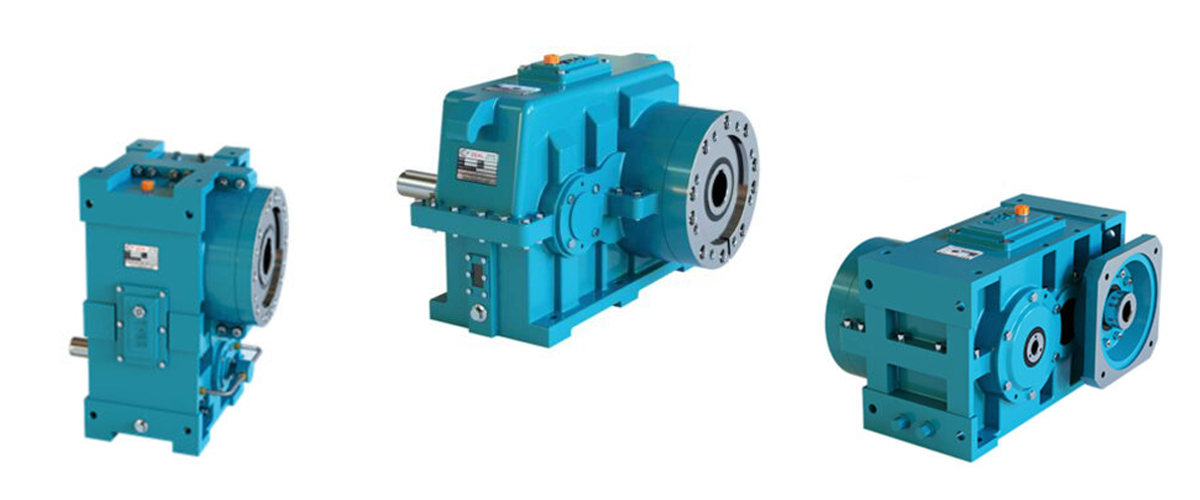
A helical gearbox that runs quietly today can be scrapping gear teeth in eighteen months — and the difference almost always comes down to how it was lubricated, aligned, and loaded, not how it was built. Plant engineers across plastic extrusion, material handling, food processing, and heavy manufacturing lose thousands of hours of uptime every year to gear wear that was entirely preventable. Left unchecked, worn gear teeth increase backlash, generate heat, raise noise levels, and eventually cause catastrophic tooth breakage that takes the whole drivetrain down with it. In this guide, you will learn exactly why gear wear happens inside industrial helical gearboxes, the four wear patterns every maintenance engineer should be able to recognize, and the specific lubrication, alignment, and monitoring practices that extend gearbox life by years rather than months. Lubrication-related failures remain the single largest cause of premature gearbox breakdown in industrial plants — which means most gear wear is not a design flaw, it is a maintenance gap.
Why Gear Wear Happens in Helical Gearboxes
Every helical gearbox is designed around one assumption: that the oil film between meshing gear teeth never fully breaks down. Helical gears transmit power through angled teeth that stay in contact longer than straight spur teeth, which is what gives them their smooth, low-noise operation. But that same extended contact also means more sliding friction at the tooth surface — and friction, not load alone, is what drives most gear wear.
The Root Causes Engineers Overlook
In practice, gear wear rarely comes from a single cause. It builds from a combination of factors working together over thousands of operating hours:
- Insufficient or degraded lubrication — oil that has lost its extreme-pressure (EP) additive package no longer separates the tooth surfaces properly under load.
- Shaft misalignment — even a few thousandths of an inch of angular or parallel misalignment concentrates load on one edge of the tooth instead of spreading it across the full face width.
- Contamination — dust, moisture, and metal particles that enter through a clogged breather or a worn seal act like grinding paste inside the mesh.
- Overloading and shock loads — running a gearbox beyond its rated torque or service factor accelerates surface fatigue on the tooth flank.
- Excess vibration — an unlevel foundation or loose mounting bolts transmits vibration directly into the gear mesh, a leading cause of premature failure in gear units left mounted on unstable bases.
Understanding which of these factors is at play in your application is the first step toward actually fixing the problem rather than repeatedly replacing worn gear sets.
The 4 Main Types of Gear Wear You Need to Recognize
Not all gear wear looks the same, and the type of wear you see on a gear tooth tells you exactly what is going wrong inside the gearbox. Learning to read these patterns during a routine inspection can save you from an unplanned shutdown.
Abrasive Wear
Abrasive wear happens when hard particles — metal fines, sand, or weld slag — get trapped between the gear teeth and scratch the surface with every rotation. It shows up as fine, parallel scratch lines running in the direction of sliding. Left unaddressed, it thins the tooth profile and eventually changes the gear’s operating clearance.
Adhesive Wear (Scoring and Scuffing)
Adhesive wear occurs when the oil film breaks down completely under heavy load or high speed, allowing metal-to-metal contact. Microscopic peaks on opposing tooth surfaces weld together and tear apart as the gears rotate, leaving rough, torn patches on the tooth flank. This is one of the fastest-progressing wear types and is almost always linked to the wrong oil viscosity or oil that has overheated.
Pitting (Surface Fatigue)
Pitting is a fatigue failure, not a lubrication failure in the traditional sense. Repeated contact stress below the tooth surface eventually forms micro-cracks that grow until small chips break away, leaving a pitted, cratered appearance near the pitch line. A limited amount of “initial pitting” during early running-in is normal; progressive pitting that keeps spreading is a warning sign of overload or incorrect gear geometry.
Corrosive Wear
Corrosive wear is a chemical attack on the gear surface, usually caused by moisture that has entered the oil through a damaged seal or a condensation cycle in a humid plant environment. It leaves a dull, etched, or rust-colored surface rather than the bright, scratched look of abrasive wear.
Gear Wear Types at a Glance
| Wear Type | Primary Cause | Visual Sign | Fastest Fix |
| Abrasive | Contaminated oil, dirty breather | Fine parallel scratches | Filter/replace oil, seal inspection |
| Adhesive (Scoring) | Oil film breakdown, overheating | Torn, rough patches | Correct viscosity grade, cool the unit |
| Pitting | Surface fatigue, overload | Small pits near pitch line | Reduce load, verify service factor |
| Corrosive | Moisture ingress | Dull, etched, rust-tinted surface | Replace seals, drain water from oil |
Recognizing which pattern you’re seeing lets you fix the actual cause instead of just replacing the gear set and waiting for the same failure to repeat in another eighteen months.
7 Proven Ways to Reduce Gear Wear in Your Gearbox
Once you know why gear wear happens, reducing it comes down to disciplined, repeatable maintenance practice. These are the seven steps that consistently extend gearbox life in real industrial operation.
Step 1: Use the Correct Oil Grade and Viscosity
Gear oil is not interchangeable across applications. Industrial helical gearboxes need mineral oil with an extreme-pressure (EP) additive package, anti-foam agents, and anti-oxidation properties to maintain the oil film under load at operating temperature. As a general reference point, gearboxes running at an average ambient temperature of 30°C to 40°C typically use ISO Viscosity Grade (VG) 320; for higher ambient temperatures or heavy-duty continuous loads, the industry moves up to ISO VG 460. The ISO 3448 viscosity classification system is the international standard most manufacturers reference when specifying the correct grade for a given operating condition.
Step 2: Follow a Strict Oil Change Schedule — Not a Calendar Guess
Oil doesn’t fail on a fixed date; it fails based on operating hours and contamination load. A commonly followed OEM schedule for industrial helical gearboxes is:
- First oil change after approximately 400(4000) hours of operation, once initial metal fines from running-in have been flushed out.
- Subsequent changes every 4,000 to 5,000 (6000-7000) operating hours.
- Maximum interval should never exceed 18 months, even in light-duty applications where hour counts are low.
- Drain while the oil is still warm so contaminants stay suspended and flow out cleanly, and flush the gearbox casing with a compatible flushing oil before refilling.
Step 3: Get Alignment Right at Installation — and Keep Checking It
Misalignment is one of the most common and most preventable causes of accelerated gear wear. During installation:
- Mount the gearbox on a flat, rigid, and properly levelled foundation or bed plate.
- Align input and output couplings precisely before final bolt tightening.
- Tighten foundation bolts to the correct torque specification using a torque wrench — never estimate by feel.
- Re-check alignment periodically, especially after any process change that alters load direction or after a coupling replacement.
Step 4: Control Contamination at the Source
Most contamination enters through two points: the breather and the seals.
- Breather plug: Check it regularly to make sure it isn’t clogged, and never paint over it — a blocked breather traps pressure and pulls in moisture-laden air on the next cooling cycle.
- Fill through a filter/mesh: Always filter oil during filling to keep particulate contamination out from the start.
- Inspect seals on schedule: A worn shaft seal is a direct entry point for dust and moisture, and replacing a seal is far cheaper than replacing a gear set.
Step 5: Load New and Rebuilt Gearboxes Gradually
Jumping straight to full load on a freshly commissioned or rebuilt gearbox is one of the fastest ways to cause premature pitting and scoring. A proven gradual loading sequence looks like this:
- Run under no load for more than 3 hours to confirm smooth rotation and check for unusual noise or vibration.
- Continue no-load running for roughly 12 hours total before introducing any load.
- Run at approximately ¼ load for 48+ hours, then ½ load for another 48+ hours.
- Increase to around 70% of rated load before finally moving to full operating load.
This staged approach allows mating tooth surfaces to work-harden evenly and lets the lubricant establish a stable film before the gearbox is asked to carry its full design torque.
Step 6: Monitor Temperature and Vibration Continuously
Rising temperature is one of the earliest and most reliable indicators of developing gear wear, because a failing oil film generates heat before it generates visible damage.
- Check gearbox temperature every 15 minutes during commissioning and startup.
- Treat continuous operating temperatures approaching the mid-90s°C as a threshold requiring investigation — most industrial gear units are not designed to run indefinitely above their specified maximum bearing operating temperature, and readings above that limit should prompt a call to your gearbox manufacturer before continued operation.
- Track vibration trends over time rather than reacting only to sudden spikes; a gradual increase often signals bearing wear developing ahead of visible gear tooth damage.
Step 7: Maintain the Cooling System on Larger Units
Larger helical gearboxes often rely on cooling coils or forced lubrication systems to keep oil viscosity — and therefore the protective film — stable under continuous heavy load.
- Where cooling coils are fitted, use demineralized (DM) water where possible to prevent scale buildup that chokes coolant flow.
- In cold environments where frost risk exists, drain cooling water during extended shutdowns and clear the coil with compressed air to avoid freeze damage.
- On force-fed lubrication systems, confirm oil pump delivery pressure is holding at its specified operating range; a drop in pressure often precedes a lubrication-related wear event.
How Zeal Gears Helical Gearboxes Are Engineered to Resist Wear
Good maintenance practice can only do so much if the gearbox itself wasn’t engineered with wear resistance in mind from the start. This is where design discipline matters as much as daily upkeep.
At Zeal Gears Pvt. Ltd., every helical gearbox — from single-stage to two-stage and parallel shaft configurations — is built around a positive, automatic lubrication system that keeps oil reaching the bearings and gear mesh at every running speed, in both directions of rotation. Smaller units use a built-in splash lubrication system, while larger gearboxes are fitted with a geared, positive-displacement oil pump to guarantee consistent force-fed delivery under demanding continuous-duty conditions. Housings are cast from graded iron for rigidity, gears are machined from high-grade steel alloys on precision CNC equipment, and the underlying gear geometry has been refined against more than two dozen design constraint groups to minimize both power loss and unnecessary bulk — the combination that has made Zeal gear units recognized in the plastic and rubber extrusion industry for smooth, quiet, long-running performance.
If your current gearbox is wearing out faster than it should, the underlying design — not just the maintenance routine — may be the real limiting factor. Explore Zeal Gears’ helical gearbox range to see engineering built for reduced wear from day one.
Choosing the Right Lubrication & Maintenance Program
Not every plant needs the same maintenance intensity, and over-engineering your maintenance schedule wastes budget just as under-engineering it wastes gearboxes. Use these factors to right-size your program.
Ambient temperature and duty cycle
A gearbox running in a 25°C air-conditioned facility at light, intermittent duty can generally stay within standard ISO VG 320 territory. A unit running continuously in a 45°C plastics extrusion hall under heavy, constant torque should move to ISO VG 460 and shorter oil-sampling intervals.
Application criticality
For gearboxes on a bottleneck process line — where downtime stops the whole plant — invest in vibration sensors and scheduled oil analysis rather than relying on visual inspection alone. For non-critical, redundant, or easily swapped units, a disciplined manual inspection and oil-change calendar is often sufficient.
Environmental exposure
Gearboxes exposed to washdown, humidity, or airborne dust (food processing, recycling, and material handling environments) need tighter seal inspection intervals and more frequent breather checks than a clean, climate-controlled indoor installation.
Load variability
Applications with frequent starts, stops, or shock loading — shredders, crushers, and reciprocating machinery — put more fatigue stress on gear teeth than steady, continuous-speed applications, and should be sized with a higher service factor from the outset rather than relying on maintenance alone to compensate for under sizing.
Manufacturer-specific guidance
Always cross-check your gearbox nameplate and OEM documentation against generic maintenance intervals. Oil grade, change interval, and maximum operating temperature can vary by manufacturer and model, and the figures in your Installation, Operation, and Maintenance (IOM) manual should always take precedence over general industry guidance.
FAQs on Gear Wear and Helical Gearbox Maintenance
Q1. What causes gear wear in a helical gearbox?
Gear wear is caused by a combination of friction, contamination, misalignment, and overloading. Poor or degraded lubrication is the most common root cause, since it allows metal-to-metal contact between gear teeth. Misalignment concentrates load unevenly across the tooth face, while dust and moisture entering through worn seals act abrasively on the gear surface over time.
Q2. How often should I change the oil in an industrial helical gearbox?
A widely followed schedule is a first oil change at around 4000 operating hours, followed by subsequent changes every 6000-7000 hours. Regardless of hour count, the interval should not exceed 18 months. Always confirm the exact figures against your specific gearbox’s IOM manual, since heavier duty applications may need shorter intervals.
Q3. What is the best oil viscosity for a helical gearbox?
For gearboxes operating at an average ambient temperature of 30°C to 40°C, ISO Viscosity Grade 320 mineral oil with EP additives is a common industry reference point. For higher ambient temperatures or heavy continuous-duty applications, ISO VG 460 is typically recommended instead. Always verify against your manufacturer’s specification before selecting an oil.
Q4. Can misalignment really cause gear wear?
Yes, and it’s one of the most underestimated causes. Even minor angular or parallel misalignment between the gearbox and connected shaft concentrates contact stress on one edge of the gear tooth instead of the full face width, accelerating localized wear, increasing vibration, and shortening bearing life significantly faster than proper alignment would.
Q5. How do I know if my gearbox bearings are wearing out?
Early bearing wear typically shows up as unusual noise, increased vibration, and a gradual rise in operating temperature before any visible gear damage appears. Tracking temperature and vibration trends over time — rather than only reacting to sudden changes — is the most reliable way to catch bearing wear before it damages the gear mesh.
Q6. What is the difference between pitting and scoring on gear teeth?
Pitting is a surface fatigue failure that appears as small pits or craters near the pitch line, usually from repeated contact stress or overload. Scoring (adhesive wear) is caused by oil film breakdown allowing metal-to-metal contact, leaving torn, rough patches. Pitting relates to load and cycles; scoring relates to lubrication and heat.
Q7. Is synthetic oil better than mineral oil for reducing gear wear?
Synthetic oils generally offer better thermal stability and longer service life in extreme temperature or heavy-duty conditions, but many industrial helical gearboxes are specified and tested with EP mineral oils by the manufacturer. Switching oil types should always be confirmed against your gearbox’s approved lubricant list to avoid compatibility issues with seals and additives.
Q8. What temperature is too hot for a helical gearbox?
Most industrial gear units specify a maximum bearing operating temperature, commonly around the low-to-mid 90s°C for standard lubricants. Continuous readings at or above that specified limit indicate a lubrication, cooling, or load problem and should prompt immediate investigation rather than continued operation, since heat accelerates every other form of gear wear.
Q9. How does contamination affect gear wear?
Contaminants like dust, metal fines, or moisture act like an abrasive paste inside the gear mesh, scratching tooth surfaces and degrading the oil’s protective additive package. Moisture specifically promotes corrosive wear and reduces the oil film’s load-carrying capacity, which is why sealed breathers and intact shaft seals are critical wear-prevention components.
Q10. Can I mix two ISO VG oil grades?
Mixing viscosity grades is not recommended. Blending oils changes the resulting viscosity unpredictably and can dilute the extreme-pressure additive package below the level needed to protect gear teeth under full load. Always drain and flush completely before switching to a different viscosity grade or oil brand.
Q11. How long does a well-maintained helical gearbox last?
With correct lubrication, alignment, and load management, industrial helical gearboxes commonly run for well over a decade in continuous service, with individual components like bearings and seals replaced during scheduled maintenance rather than the whole unit. Poor maintenance can cut that lifespan dramatically, sometimes to just a few years.
Q12. Should I load a new gearbox gradually or run it at full load immediately?
New or rebuilt gearboxes should always be loaded gradually. A typical sequence includes a no-load run of several hours, followed by staged increases through roughly a quarter load, half load, and 70% load — each held for an extended period — before reaching full rated load. This lets tooth surfaces and lubricant film stabilize evenly.
Q13. What is a breather plug and why does it matter for wear prevention?
A breather plug relieves internal pressure that builds up as a gearbox heats during operation. If it becomes clogged or is painted over, pressure build-up can force oil past seals, and the resulting vacuum on cooldown draws in moisture-laden air — both of which directly contribute to contamination-related gear wear.
Q14. How often should I inspect my gearbox for wear?
Visual inspections are typically recommended every few months for standard-duty applications, with more frequent checks for heavy-duty or continuous-operation equipment. Oil level and breather condition should be checked more often — ideally as part of a routine walk-down — since these low-effort checks catch problems long before a full teardown inspection would.
Q15. Does vibration monitoring actually prevent gear wear?
Vibration monitoring doesn’t prevent wear directly, but it is one of the most effective tools for catching developing wear — especially bearing wear — before it progresses into gear tooth damage. A gradual upward trend in vibration readings is often detectable weeks or months before a failure would otherwise become audible or visible.
Q16. Do two-stage helical gearboxes wear faster than single-stage units?
Not inherently. A two-stage gearbox has two sets of meshing gears instead of one, but each set is designed for its specific reduction stage and load. Wear rate depends far more on lubrication, alignment, and duty cycle than on the number of stages, provided the unit was correctly sized for the application in the first place.
Conclusion: Gear Wear Is Preventable, Not Inevitable
Gear wear inside an industrial helical gearbox is rarely a mystery once you know what to look for. It comes down to five controllable factors: the right lubricant at the right viscosity, a disciplined oil-change schedule based on operating hours rather than guesswork, precise alignment maintained over time, tight contamination control at the breather and seals, and a gradual, monitored loading sequence at every commissioning or restart. Get these right, and a well-built helical gearbox can run reliably for well over a decade instead of needing a gear set replacement every few years.
If your current gearbox is showing early wear signs — rising temperature, increasing noise, or visible tooth damage — don’t wait for a full failure to act. Get in touch with Zeal Gears for a maintenance review or to explore a helical gearbox range engineered from the ground up to resist wear under continuous industrial duty.
